Sitting on the couch of my London rental flat that I once shared with my ex-partner, a wave of aloneness hit me like a ton of bricks. At 29, life as I knew it was over. I was single, nearing 30 and left with a long-term lease to sort and a new home to find.
Swallowed by a suffocating overwhelm, I reached for my laptop and typed in a website I had been a notorious naysayer of. The glowing white background of ChatGPT burned my eyes as I scanned the screen for the search bar and desperately sought answers.
A usual traditionalist, if I needed help in the past, I picked up the phone, dialled a therapist's number and booked in a session to detangle my muddle of emotions with a real human being, who was trained to guide me with a firm hand through the pits of despair. But once my prompt, "I lived with my ex and was with him for almost two years - help me get through my breakup ", had been sent into the ether, a surprising thing happened next.
"I’m here with you. You don’t have to carry this moment by yourself".
I was met with what felt like an authentically friendly and sympathetic line of text, that was equally soothing and terrifying. This was too easy, too quick and too good to be true… right?
Hours passed, and I was deep in my web of communication with the Artificial Intelligence bot that was spitting back exactly what I needed to hear at that moment. It followed my messy train of thought, urged me to calm down, breathe, and offered me a 30-day action plan to "get my spark back" after nearly two years of merging my life with the wrong person.
Prescribing that I sign off, go outside and do something small for myself that would "romanticise my existence", the bot bid me farewell and promised me it would be there at the touch of a button, the next time I needed it. No waiting lists, no financial burden, no hassle - but still, something wasn't sitting right.
Snapping the laptop lid shut, I would be lying if I said I didn't feel better after my virtual therapy session. I reluctantly carried around a sense of guilty assuredness at the knowledge that my bot would be in my pocket wherever I went. Deep down, I think I knew it wasn't the best way to go about things, but at that moment, I didn't care. ChatGPT helped me stop crying faster than any therapist could have, at the time.
Despite being a champion of talking therapies, I didn't follow up with an in-person session with a real, qualified professional. Instead, I soldiered on, checking in with my newfound friend each time a wobble escaped to the surface, and kept my bot addiction a secret. Was I wrong to use AI to coach me through a breakup, or is it the exact tool we need in a world with overburdened health services and never-ending barriers to entry?
 © Getty Images
The three As and 'a seductive combo'
In order to clear up my confusion, I enlisted the help of behavioural psychologist, TV duty of care psychologist and relationship and dating counsellor, Jo Hemmings. She explained to me the most likely rationale behind my out-of-character use of AI.
Jo said: "At heart, this isn’t about technology, it’s about access, anxiety, and attachment. We’re living in an era where emotional distress is rising faster than the systems designed to contain it. Therapy waiting lists can stretch for months. Costs are prohibitive. And for many people, admitting 'I need help' still carries shame."
She continued: "Against that backdrop, AI appears not as a gimmick, but as a relief: always available, non-judgmental, free (or cheap), instantly responsive and doesn’t challenge us unless we invite it to. That is a seductive combo."
When instant gratification takes over
Due to the tumultuous nature of a breakup and the tidal wave of emotions that come with it, the need for instant relief or reassurance is understandable and to be expected. According to Jo, this is one of the most indicative explanations for the rising popularity of AI instead of therapy.
She revealed: "One of the most powerful psychological reinforcers is immediacy. When we feel distressed, we want relief now, not in three weeks’ time, not after filling in forms, and certainly not after sitting face-to-face with someone who might make us think more deeply.
"The kindness it [AI] shows us, 'Thank you so much for sharing that, you are not alone etc', can feel deeply comforting. The language is warm, empathic, often uncannily 'human'. Over time, the brain begins to respond as though there is a relationship there. We know intellectually it isn’t a person, but emotionally, the experience can feel relational."
 © Getty Images
'Tell me what I want to hear'
While the reasons behind reaching out to AI are becoming more clear to experts and professionals, so are the risks attached to using the bot as a source of therapeutic help. It may feel good in the moment, as I experienced, to have a voice validate your doubts and toxic narratives, but in the long run, this could cause deeper harm if not addressed.
"That 'therapeutic relationship' [with AI] can become psychologically risky because AI can be steered," Jo shared. She added: "If you phrase a question in a way that seeks validation, reassurance, or justification, you’re likely to get it. That doesn’t mean the answer is wrong - but it may be partial, skewed toward comfort rather than growth.
"In therapy, discomfort is often the point. We may be challenged on patterns of behaviour, confronting blind spots or behaviours that may cause self-sabotage. We may not reveal important aspects of our concerns, unless prompted by a real therapist. And AI prioritises emotional safety over emotional challenge."
Jo went on to note: "So yes, you can manipulate a chatbot to validate you and that can reinforce victim narratives, avoidance of accountability and rigid beliefs about what you are or aren’t willing to give to the situation. Validation without calibration can quietly become self-confirmation bias."
 © Getty Images
Should AI co-exist with therapy?
As with everything in this current era, we need to accept that technology is becoming a part of our lives in a big way. Rather than fighting against it, it might be an idea to see how it can be incorporated alongside traditional practices humans have worked hard to perfect - therapy included.
Jo surmised: "There are some real benefits, such as low-barrier emotional expression (especially for people afraid to open up); support between therapy sessions; help with articulating feelings before difficult conversations and reduced loneliness in moments of acute distress."
However, the expert's overall advice is to proceed with heavy caution: "Because AI also encourages avoidance of deeper, relational work and creates an illusion of intimacy without real attachment, I wouldn’t recommend it. It can’t see visual body language cues or hesitancy in speech and while it simulates care, it can’t have any real care. It’s a bot not an experienced, qualified human being."
 © DAVID_MYERS_PHTOGRAPHY
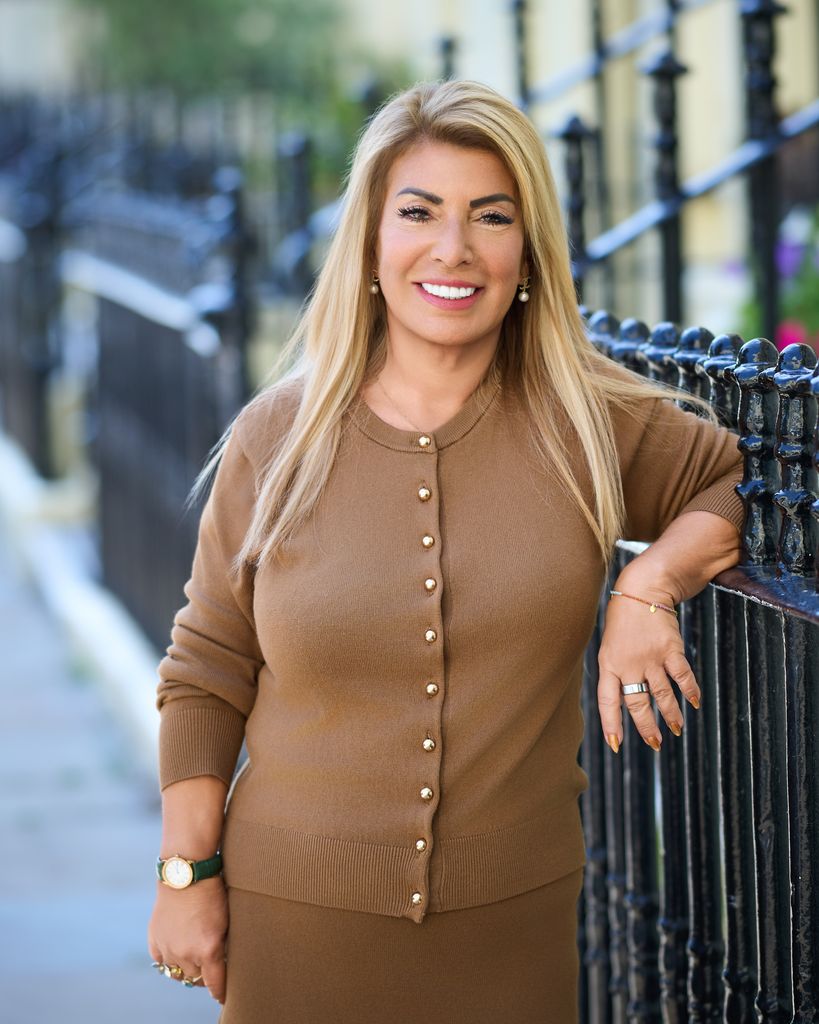
Jo Hemmings is a behavioural psychologist, FMBPsS, specialising in media and news analysis in broadcasting, a TV and radio personality, a TV duty of care psychologist and a relationship and dating counsellor.
If you are struggling to cope with a breakup, reach out to charities like Mind who are always on hand to offer help and support.