
We've seen a massive surge in the popularity of hyaluronic acid fillers in recent years as more and more of us try to fend off (or correct) the signs of ageing.
Yet, just as we are coming to terms with the revelation that these fillers aren't always fully reabsorbed - leaving behind a lasting "aesthetic footprint" that may have unnatural or "pillow face" effects - a vast new array of collagen-stimulating treatments has arrived.
This new trend signals a fundamental shift in how aesthetic medicine approaches facial rejuvenation.
Why regenerative aesthetics is the new era of anti-ageing
 © Getty Images
"There has recently been a profound transformation in the beauty industry. The concept of the 'negative aesthetic footprint' has led practitioners to favour regenerative treatments over traditional fillers," explains aesthetic expert Dr Carmen Fernández Ayestarán.
For example, if we go back to aesthetic trends twenty years ago, cosmetic "tweakments" revolved around 'filling' wrinkles and restoring lost volume.
Now, explains Dr Mar Mira, the focus has shifted to "regenerating the skin, enhancing its quality, and stimulating the natural production of collagen and elastin through bio-stimulators. This is 'no-trace' aesthetic medicine, where a natural result is the ultimate goal."
In other words, the industry is moving towards injectables and devices that trigger the production of endogenous collagen. The primary advantage of these treatments is that they are biocompatible and biodegradable, improving firmness, elasticity and skin texture without adding artificial volume.
The rise of collagen biostimulators and injectable inducers
When it comes to injectables that boost collagen, we are seeing "new substances alongside improved versions of existing formulas, re-engineered to be kinder to our immune system and triggering fewer inflammation issues," says surgeon and aesthetic specialist Dr Virtudes Ruíz.
"This is 'no-trace' aesthetic medicine, where a natural result is the ultimate goal"
This new approach includes familiar names like calcium hydroxyapatite and polylactic acid. "They've been around for years, but they're finally getting the recognition they deserve," notes Dr Fernández Ayestarán. The newest players on the market, however, are polynucleotides - a much-talked about innovation in the field.
What are polynucleotides? The DNA-based treatment gaining popularity
Why is facial rejuvenation moving in this direction? The appeal lies in a shared promise: these treatments give a much more natural result.
"Their primary advantage is biocompatibility, meaning they are safe and carry a much lower risk of allergic reaction. Since they are bioabsorbable, they break down naturally without harming the body," explains Dr Mira. By stimulating the body's own production of collagen and elastin, they improve skin texture and firmness while softening fine lines and wrinkles.
 © Getty Images
"The results are more natural and longer-lasting, which means fewer trips to the clinic. Plus, the changes appear gradually, ensuring a much smoother, more subtle transition."
"The concept of the 'negative aesthetic footprint' has led practitioners to favour regenerative treatments over traditional fillers"
The procedure, as explained by doctors
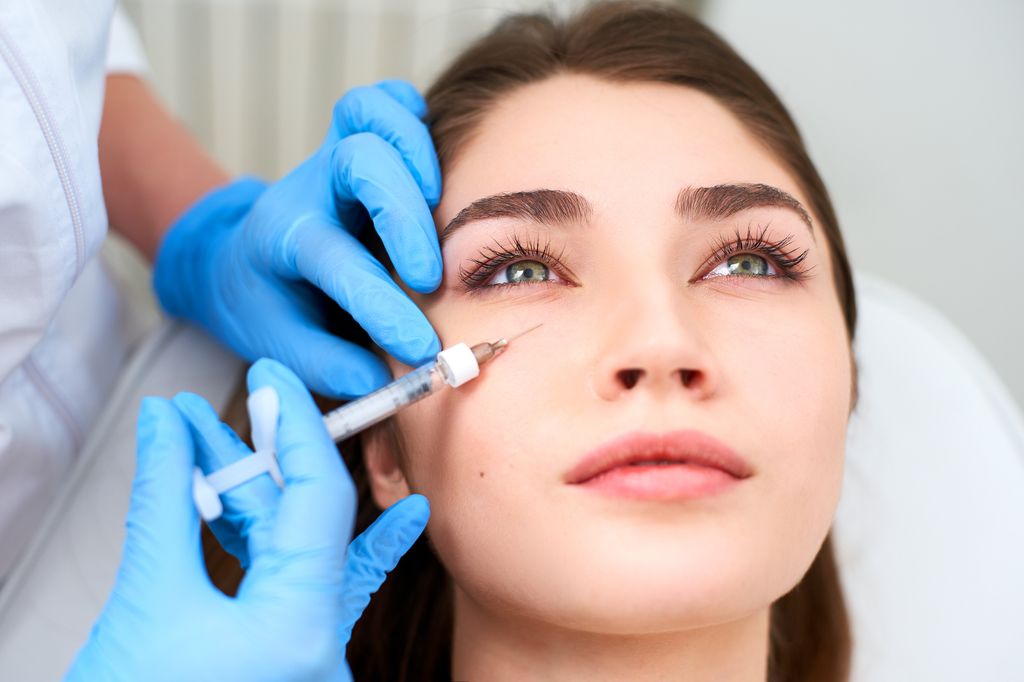
Administered via a cannula into the dermis - typically through two entry points on each side of the face - the effects of this treatment last for roughly a year. "Collagen production begins around three weeks post-treatment, with the most visible results emerging between three and 12 weeks," adds aesthetic specialist Dr Sofía Ruíz del Cueto.
Experts are also increasingly advocating for the use of ultrasound. Surgeon Dr María Vicente advises: "Ultrasound monitoring both before and three months after treatment is now essential; it allows us to verify the success scientifically rather than relying on observation."
 © Getty Images
Types of collagen inducers: From CaHA to PLLA
There are a number of types of collagen inducers, ranging from pioneer Calcium Hydroxyapatite (CaHA) to the latest arrival on the scene, trending polynucleotides, famously tried by Jennifer Aniston.
Here's the expert breakdown:
1. Calcium Hydroxyapatite (CaHA)
This was one of the very first collagen inducers to hit the market. "This biocompatible and reabsorbable substance, often described as being similar to human bone, is injected into the dermis. The aim isn't simply to add volume, but to restore structural support while stimulating collagen and elastin. It is particularly effective for the cheeks and nasolabial folds," says medical aesthetics expert Dr Leo Cerrud.
It can be used alone or in a 'hybrid' formula, combined with hyaluronic acid in a single vial. "It is primarily used to combat sagging skin and redefine the jawline," adds Dr Ayestarán.
2. Polylactic Acid (PLLA)
While this is another well-established inducer, the molecule has recently been refined. "Previously, it stimulated collagen through an inflammatory response, which could sometimes lead to poor product degradation and lasting lumps. However, PLLA now works through active regeneration. This means a lower risk of immune reactions as it breaks down fully," explains Dr Vicente. It is typically recommended for treating sagging skin on both the face and body.
 © Getty Images
3. Polycaprolactone (PCL) and Polydioxanone (PDO Threads)
PCL is a biodegradable, gel-based polymer. "It is placed in the subdermal layer to 'plump' deep lines and furrows - such as nasolabial folds, marionette lines and sunken temples - and counteract age-related tissue loss," explains Dr Cerrud.
PDO, on the other hand, is used in what are commonly known as thread lifts. "When placed in the dermis, they provide a subtle, non-surgical 'lift'," he describes.
4. Polynucleotides
Polynucleotides promise to subtly rejuvenate without leaving any 'aesthetic footprint'. "These are the building blocks of DNA and RNA. Their role is to signal cell renewal and boost collagen and elastin production while improving hydration. They don't add volume like a traditional filler; they act as true biostimulators," says Dr Ruíz.
It offers superior hydration and antioxidant protection while also evening out skin tone. "Polynucleotides have been used therapeutically for decades for tissue repair and are now backed by numerous aesthetic studies," adds Dr Cerrud. They are considered ideal for crepey skin, dark circles and rejuvenating the neck.
Non-surgical skin tightening: collagen-inducing technologies
Devices, of course, offer another effective way to trigger new collagen synthesis. "Essentially, anything that creates a controlled injury to the tissue will stimulate a response," explains Dr Mira. This category includes radiofrequency, high-intensity focused ultrasound (HIFU), lasers, and Intense Pulsed Light (IPL).
"These treatments don't add volume like a traditional filler; they act as true biostimulators"
"Depending on the depth and intensity we use, we can stimulate collagen production at a superficial or deep level - or even across multiple planes," she adds.
If you've read this far and aren't sure which treatment is right for you, don’t worry - that's perfectly normal. The best approach is to seek a professional consultation.
"Based on a tailored evaluation to achieve the best possible results, a specialist might recommend a specific collagen inducer, or maybe even a combination of treatments," concludes Dr Ruíz del Cueto.


