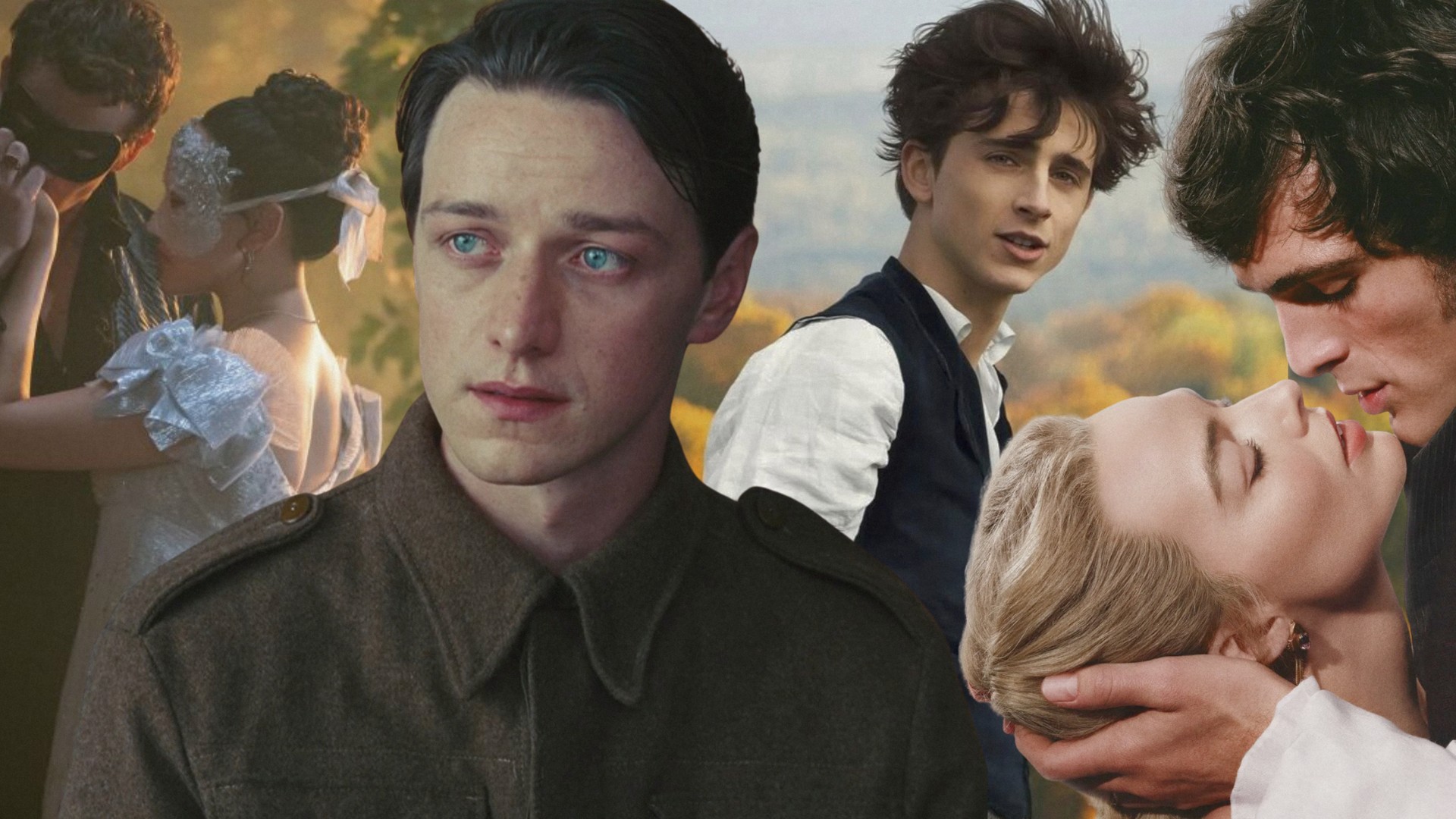

“Bring back men who yearn!” - the rallying cry taking over social media at present. Stitched alongside clips from The Summer I Turned Pretty, Heated Rivalry, Greta Gerwig’s Little Women and Pride and Prejudice (any version), the TikTok-trending phrase has encapsulated a collective Gen Z feeling - that of wanting to be desired.
Which is surprising, considering the prevailing narrative that having a boyfriend is embarrassing and getting the ick is the death knell for blossoming relationships. Social media has done a 180, shifting from the allure of aloofness to unapologetic, in-your-face lamenting. Men are no longer being pigeonholed as ‘simps’ for expressing their feelings, but instead celebrated for it - with hormone-induced fervour for that matter.
What’s driving the newfound fascination? Perhaps it’s the buzz around Emerald Fennell’s Wuthering Heights, starring the luminous Margot Robbie and a deliciously dishevelled Jacob Elordi, whose characters are swept up in gothic romance. Or maybe it’s the release of Bridgerton Season 5, which follows the Cinderella-inspired plot line of the rakish Benedict Bridgerton (Luke Thompson) as he falls for the mysterious Sophie (Yerin Ha). The art of pining has, for lack of a better word, reached its climax.
I witnessed Gen Z’s captivation with male yearning firsthand back in November. My brother scored me last-minute tickets to a Role Model gig (the perks of having siblings in music), which was the loudest concert I’d ever attended. Hordes of teenage girls (the bar area was stunningly queueless) gathered in the Eventim Apollo to see the 28-year-old perform tunes from his album Kansas Anymore, written while mourning his relationship with YouTuber Emma Chamberlain.
 © Bridgerton
 © Little Women
 © Getty Images
 © Call Me By Your Name
Critics have widely noted that the artist’s appeal lies in his celebration of an ex, rather than the usual dismissal common in heartbreak anthems. This mix of respect and yearning for a past lover strikes a chord with female audiences, tired of the familiar anti-women narratives in pop culture.
“It’s now cool for men to be hyper-romantic and intensely emotional, they’re now deemed more ‘desirable’ by society for doing so, and the biggest heartthrobs of the moment only prove it: the likes of Paul Mescal, Jacob Elordi and Timothée Chalamet are known for being attractive, well-read, emotional and for playing sensitive, yearning men on the screen,” says writer Josh Osman.
“There’s a certain scrutiny and scepticism around it, with people labelling yearning, emotional or artsy men as ‘performative’, but at the same time, any trend that’s encouraging men to be more open with their emotions is a good thing in my eyes,” he continues. “I think that it’s fascinating to see the intense unrequited longing that has long been a staple of queer storytelling seep into the mainstream of more heteronormative media, such as what we’re likely to see with Emerald Fennell’s take on Wuthering Heights.”
Yet it’s hard to ignore the sense that something deeper is at play. The aforementioned instances of male vulnerability remain a hot topic, particularly following the success of Netflix’s mega-hit series Adolescence. Men who yearn offer a welcome counterpoint to toxic masculinity, a topic which has ominously loomed over pop culture for years. The endless stream of documentaries about incels doesn’t exactly make for light viewing, nor the relentless BBC News reports of violence against women. In this digital climate, the promise of a Heathcliff or a Mr Darcy offers a brief escape from the harsh realities of dating as a woman today, and from the dead-end cycle of Hinge ghosting. No games, no late-night booty calls, just overt, heart-on-sleeve hankering.
The fun of the trend is that it is not rooted in reality, but nobody is pretending it is. Having a crush, while amusing at first, can be achingly painful. The will-they-won’t-they questions hang over one’s head like a raincloud, while sleepless nights staring at the ceiling in helpless frustration result in bleary-eyed mornings fuelled by coffee. This feeling, coined ‘limerance’ by psychologist Dorothy Tennov in 1979, has even been linked to delusional and obsessive behaviours, with potential consequences including symptoms of post-traumatic stress disorder, depression and attachment anxiety according to scholars.
 © Challengers
 © Before Sunrise
Luckily, it’s rare that our crushes become so intense. Why? Because the internet acts as a mediator between crush and crushee. “The internet, in essence, offers all users the ability to experience limerence from the comfort of our own homes, developing parasocial relationships with people online and pursuing these one-sided relationships whilst remaining hidden thanks to the veil of anonymity that the internet provides,” write Paula Bradbury, Emma Short and Paul Bleakley in a 2025 paper on the subject. We’re drip-fed fragments of our crushes’ lives via social media, supplying us with that all-important hit of dopamine for the day.
Deep down, we all know that nobody is perfect. Not even Harry Styles - as his latest Ticketmaster conundrum proved. Yet, it’s way more fun to pretend they are, hence why so many yearning men solely exist onscreen. For those in long term relationships, these cinematic moments of male yearning are a reminder of the blissful honeymoon period, marked by first kisses, cheeky texts and cute lingerie. For singles, it offers up an image of what could be - lust and love rolled into one meaningful connection that lies on the horizon - a far cry from the tired dating app prompts and pick-up lines.
Realistically, this trend isn’t going anywhere. Since our teenage years, we have been privy to the archetype of the yearning man, introduced to us by teachers who slapped classic texts like Jane Eyre and Romeo & Juliet down on our school desks. For Brits in particular, the concept is hardwired into our cultural DNA, thanks to Bridget Jones and quite literally anything written by Richard Curtis (ironic, considering most British lads famously have the emotional capacity of a teaspoon.)
But, as the saying goes, “men who yearn, earn,” and women know that those who, to paraphrase Julia Quinn, “burn” for them, are the ones who ultimately reap the rewards of their vulnerability. So, boys, it's your move.


