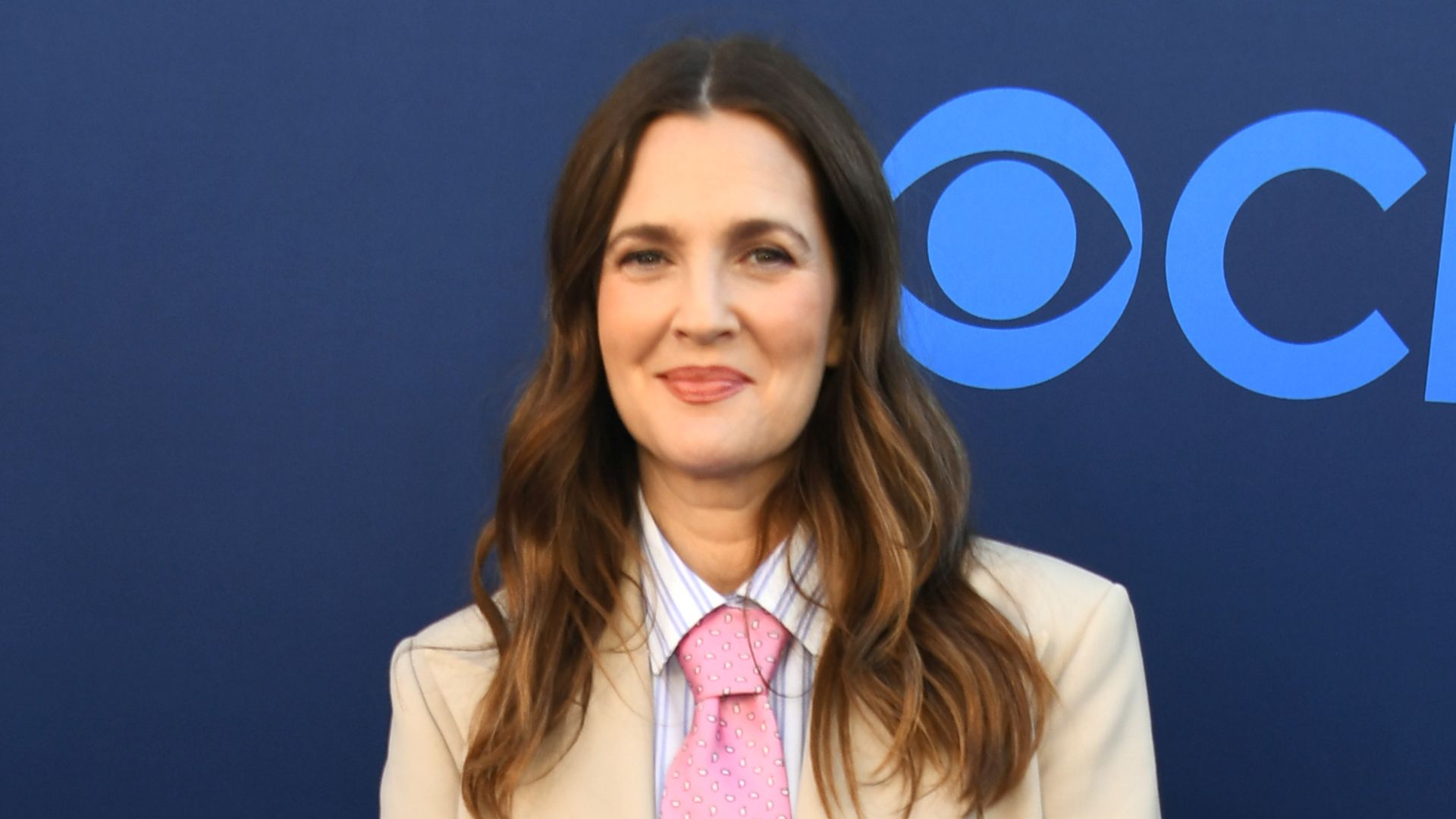

Drew Barrymore is always eager to get candid about difficult parenting moments.
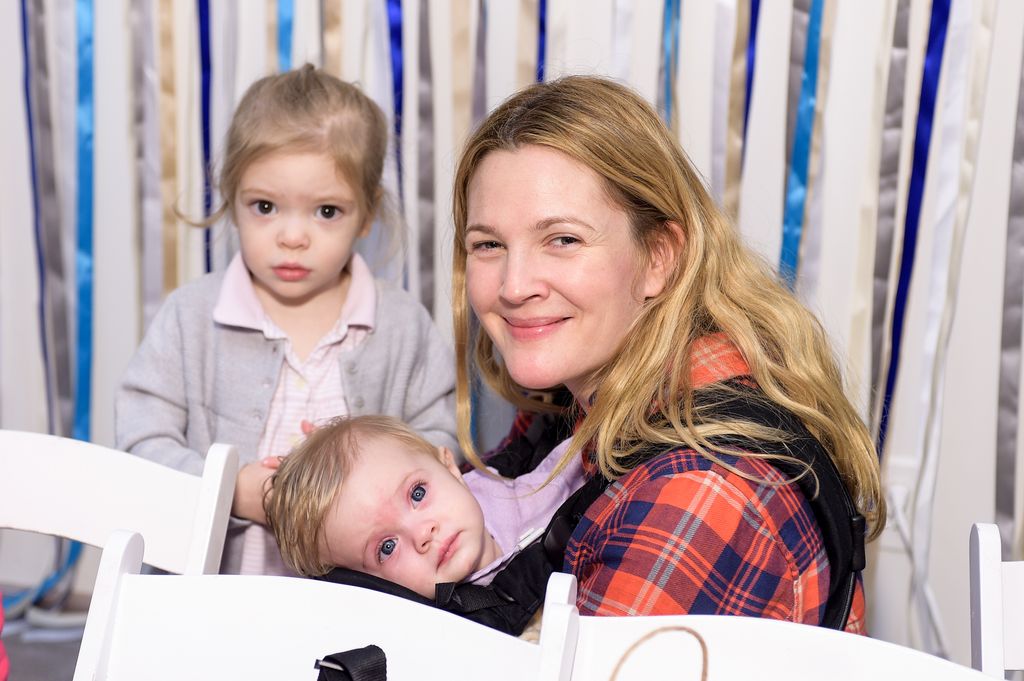
The talk show host is officially a mom to a teenager, with another just over a year away from the milestone; she shares daughters Olive, 13, and Frankie, who will be 12 in April, with ex-husband Will Kopelman, to whom she was married from 2012 to 2016.
And lately, there's one specific parenting challenge that is becoming increasingly difficult to avoid: allowing her kids to have smart phones.
 © Getty Images
An ever-present challenge
During a recent episode of The Drew Barrymore show, Drew, 51, was asked by an audience member what her cellphone policy is with her girls, of which she confessed: "It's the thing that's probably taking me down most both mentally and spiritually."
She then explained that she had initially said by 14, they could have phones, a promise she missed by about six months with Olive, who got her first cellphone on the eve of her bat mitzvah, when she turned 13 in September.
"I have talked to them about safety, everything. I have driven it into them ad nauseum," she said, though noted: "They are still 13, think they know best, and you know,want to go out there."
 © Instagram
Drew further shared: "I have bricked out the phone, it has no capabilities of having apps. Are they opening one of their friends' phones? Probably. But I have done everything I can to communicate with them why and how, and go on this journey with them."
"I've also been like, 'This isn't your fault, you didn't do anything wrong, we're just the first humans to ever go through this, we're the pioneers and this is hard to figure out," she added, emphasizing: "Please [have] grace for you and me as we navigate this completely unprecedented new normal."
Still, though she is certainly taking it step by step, she ultimately declared to the audience: "I hate it!"
 © Getty Images
Previous candor
This is far from the first time Drew opens up about her struggle with giving young kids phones. In a September 2024 essay shared on Instagram, she reflected: "I wished many times when I was a kid that someone would tell me no. I wanted so badly to rebel all the time, and it was because I had no guardrails," adding: "I now have two daughters, aged 10 and 12. And I wonder if my life's experience was a butterfly net to capture the understanding of what young girls need."
 © Stefanie Keenan
Later explaining why she took away her daughter's phone, she revealed: "Within three months, I gathered the data of the texts and behavior. I was shocked by the results. Life depended on the phone. Happiness was embedded in it. Life source came from this mini digital box. Moods were dependent on the device," and maintained: "I want to let parents know that we can live with our children's discomfort in having to wait. We can be vilified and know we are doing what we now know to be a safer, slower and scaffolded approach."
"I am going to become the parent I needed, the adult I needed," she concluded.