

Audrey Hepburn is a totem for minimalist fashion and a symbol of Hollywood’s golden age, living on in the public imagination long after her death more than 30 years ago.
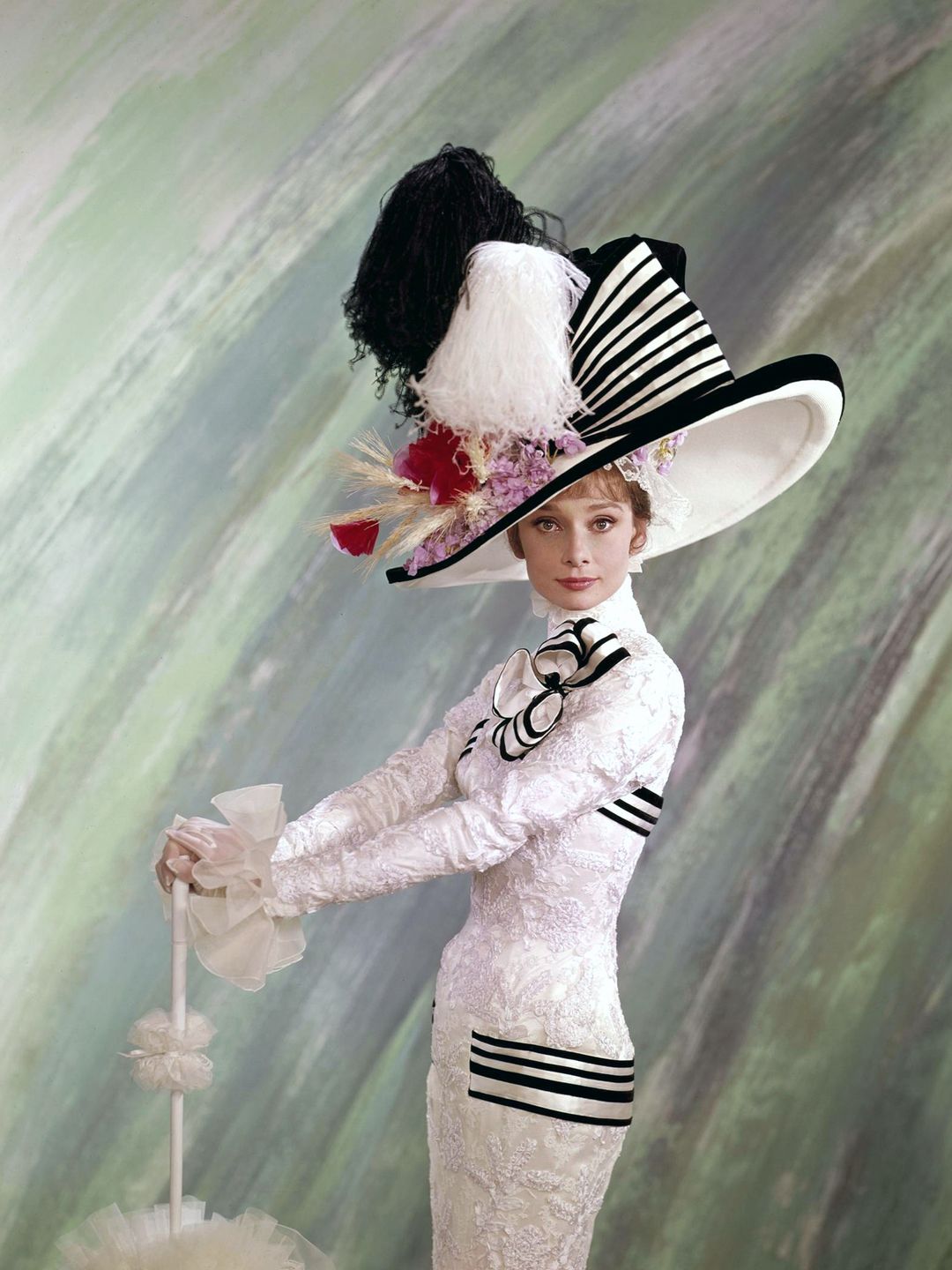
But for her son Sean Hepburn Ferrer, there is a glaring omission from her legacy that he hopes to set right: her original singing voice as it was meant to appear in her 1965 film My Fair Lady.
Speaking exclusively to HELLO!, he says that he hopes to correct the injustice inflicted upon his mother’s career when Warner Bros decided to dub her singing in My Fair Lady with the voice of Marni Nixon.
"In the [movie] business today, nobody would dream of [dubbing] her with someone like Marni Nixon, who sounds like a canary,” he says. “It’s doubly ridiculous because you’ve got Professor Higgins talking his way through the songs and my mother has to sing like an opera singer."
 © Sunset Boulevard
Sean hopes that Paramount’s move to buy Warner Bros may open the door to a re-release of My Fair Lady with Audrey’s vocals restored.
"I heard the original recordings and there are some places where she’s slightly below the note, [but] today autotune has become acceptable in the recording industry. It could be fixed."
Fear of being found out
Sean, who is speaking to promote Intimate Audrey: The Authorised Biography, of which he is co-author, knows better than anyone the gulf between Audrey’s public persona and her personal life.
Her image lives on in so many thousands of photographs that he used to play a travel game with his children called "three minutes to find granny" in which they competed to find her likeness on merchandise and posters. "It was a game few ever lost," Sean recalls.
And yet the mountain of photographs she left behind is not evidence of her confidence, he tells HELLO!, but of her well-hidden insecurity.
"There really was a fear on her end that she would be discovered as not being beautiful, or not very talented," he says. "That the ‘Audrey Hepburn moment’ would pass. Because she didn’t think much of herself in the sense of either being some extraordinary actress, nor as particularly beautiful, she accepted all the photoshoots she was offered."
Audrey died in 1993, aged 63, having made 31 films. Sean, 65, was born less than three months before his mother began filming Breakfast at Tiffany’s.
He thinks that critics are correct when they assert that Audrey was not a versatile actress. He recalls Emma Thompson’s distaste for his mother’s performances for being "fantastically twee", with a "mimsy-mumsy sweetness without any kind of bite".
“My mother would agree,” Sean says. “She was not an actress – she was a movie star. She was a perfect package of imperfections.”
The latest proof of our continuing fascination with Audrey is the announcement that Lily Collins will be playing her in an untitled film about the making of Breakfast at Tiffany’s, based on Sam Wasson’s non-fiction book, Fifth Avenue, 5 AM: Audrey Hepburn, Breakfast at Tiffany’s and the Dawn of the Modern Woman.
 © Getty Images
Sean is both delighted and sceptical about Lily’s film, and has helped her by drawing up a timeline of what his mother was doing and thinking as Breakfast at Tiffany’s developed.
"I had a talk with her the other day. What a nice girl! She has a good head on her shoulders. She’s very intelligent, very perceptive. I guess she gets that from her parents."
Lily, 37, whose father is the musician Phil Collins, is best known for playing the title role in Emily in Paris.
Sean is unsure whether Breakfast at Tiffany’s is the right film to tell his mother’s life story.
"It’s the film that began the process of making her transgenerational, transnational and transcultural, even though it’s an imperfect film," he says. "In a way, it’s really a lot of air, beautifully whipped up like a meringue. A less attractive way to look at it is that it’s a bit like a McDonald’s milkshake. After an hour you’ll be left with about one inch of milk at the bottom.
"It’s wonderful cuisine, but the contents are very delicate. It’s why I am concerned for Lily about how you make something interesting that’s really a snapshot of an era."
 © Bettmann Archive
Putting family first
Audrey continued to act after having Sean, but realised in 1967 that she wanted to put her acting career on hiatus to focus on being a mother. It would be nine years before she appeared in another film, the year Sean turned 16.
"She always said, ‘The secret in life is to make simple choices.’ You can’t sit there and wring your hands and want to have a family, and when you finally get it go off on a private plane somewhere."
Sean’s hope for his book, co-written with the novelist Wendy Holden, is that it will remind people of Audrey’s dedication to her role as a Unicef ambassador and debunk some myths.
He scoffs at claims that his mother’s slender frame was the result of an eating disorder.
"She could eat you under the table. She was very good about creating a good diet for us. She always went at it with colours. She didn’t believe in mashed potatoes and turkey and gravy. She always had greens and reds and oranges. She didn’t have any eating disorders whatsoever."
He says the only problem she had with eating was during her childhood in the Netherlands under German occupation in the Second World War, when she had nothing to eat. "In part, that constitution was forged from that period."
Audrey’s most profound legacy for her son was her retreat from being a film star. Sean recalls her doing the school run, taking him to buy socks and baking cakes when his friends came to play.
"It was normal, in as much as you can be normal as the son of a film actress who has retired. One of the greatest gifts she gave my brother and me was allowing us to grow up in that environment."
To read the full article, join Best Quality Designer Handbag 's VIP club for instant access to the magazine on your digital device. The print magazine is available on newsstands now.


