
Most of us aim for a sense of symmetry when applying our make-up. We don’t just want a seamless application; we’re often looking to balance out certain features and enhance our natural bone structure. This is exactly where visagism comes in - but what does the technique actually entail?
We caught up with professional make-up artist Reyes Tabarés to help us understand the concept. As a leading expert in visagism, she reveals how to achieve a perfectly balanced look, even when you're using minimal products for a fresh, "no-make-up" daytime glow.
What is visagism? The Hollywood secret to a balanced face
"Visagism is essentially the study of the face, taking its unique proportions and contours into account," Reyes explains. She notes that visagism, in its modern form, was pioneered in the 1930s by the legendary cinematic make-up artist George Westmore.
Westmore categorised face shapes using the oval as his benchmark - a shape still considered the "ideal" by contemporary beauty standards due to its inherent symmetry. It was from this era that the chiaroscuro (light and shade) technique emerged, using contrast to sculpt and harmonise the features.
 © Getty Images
For Reyes, visagism is an indispensable skill that allows a make-up artist to "read" a face before they even reach for a brush. This ensures the final look is polished, rather than heavy-handed.
However, she acknowledges that not everyone in the industry is a fan: "Some prefer to 'beautify' without 'correcting'. They don't see the need to alter a face's natural architecture in search of an ideal," she says.
Despite this, Reyes uses visagism to enhance her clients' favourite features, believing that make-up is a powerful vehicle for empowerment and self-confidence.
"Visagism is essentially the study of the face, taking its unique proportions and contours into account," Reyes explains of the concept, pioneered in the 1930s by Hollywood make-up artist George Westmore
She even highlights its "therapeutic" quality. "A clever, subtle application of visagism can provide an incredible visual lift," she notes.
The rules of symmetry: Understanding your facial proportions
First, we have to define what a "symmetrical" face actually is. According to Reyes, it's one where both sides are as identical as possible, with the nose, eyes and lips perfectly aligned. Traditionally, a face is considered symmetrical when its total length is roughly three times the length of the nose.
Current beauty trends favour a slender face with high cheekbones, plump lips, a contoured nose and full brows. But correcting asymmetries without looking "artificial" is an art form.
Top tips for perfect balance
Start with your eyebrows. Ensuring your brows are as symmetrical as possible helps the "upper third" of the face appear much more balanced.
 © Shutterstock / Ground Picture
Once the brow shape is sorted, the next step is master-level contouring.
The secret, says Reyes, is subtlety and seamless blending. "The heavy contouring you see in photography or on film - which relies on exaggerated, high contrast - is a world away from the soft, diffused approach needed for a daytime look."
Essentials for your make-up kit
To "recede" or soften specific areas, Reyes recommends opting for medium to deep tones. A darker foundation or cream-based contour sticks work beautifully for this.
"The heavy contouring you see in photography or on film - which relies on exaggerated, high contrast - is a world away from the soft, diffused approach needed for a daytime look"
"You can also use a matte powder bronzer or even a cool-toned brown pencil," she suggests. "Anything that effectively mimics the face's natural shadows will do the trick."
These "shadow" products help to subtly push back areas that might detract from the face's overall symmetry. Conversely, to add volume and bring features forward, reach for lighter tones and highlighters.
 © Getty Images
However, Reyes offers a word of caution: "My advice is to avoid contour products that are too dark for your natural complexion," she warns. "There is a common misconception that more contrast equals a better result, but it usually just ends up looking muddy or artificial. For a truly natural finish, 'less is more' remains the golden rule."
Lighting matters: How to apply for day or night
When applying make-up, the lighting in your space is everything. "The ideal is a neutral light - not too blue-white and not too yellow," Reyes reminds us. "The way light hits the face can completely change how the make-up looks."
- Daytime: Find a window with natural light. High noon is the most "unforgiving" light; any heavy-handedness will be immediately visible, so keep your contouring very discreet.
- Evening: If you’re heading somewhere with artificial lighting, apply your make-up under similar conditions. Artificial light tends to "wash out" make-up, so you can afford to be a bit more dramatic with your contouring for a flattering finish.
Expert fixes: 3 common mistakes that ruin your facial harmony
 © @haileybieber
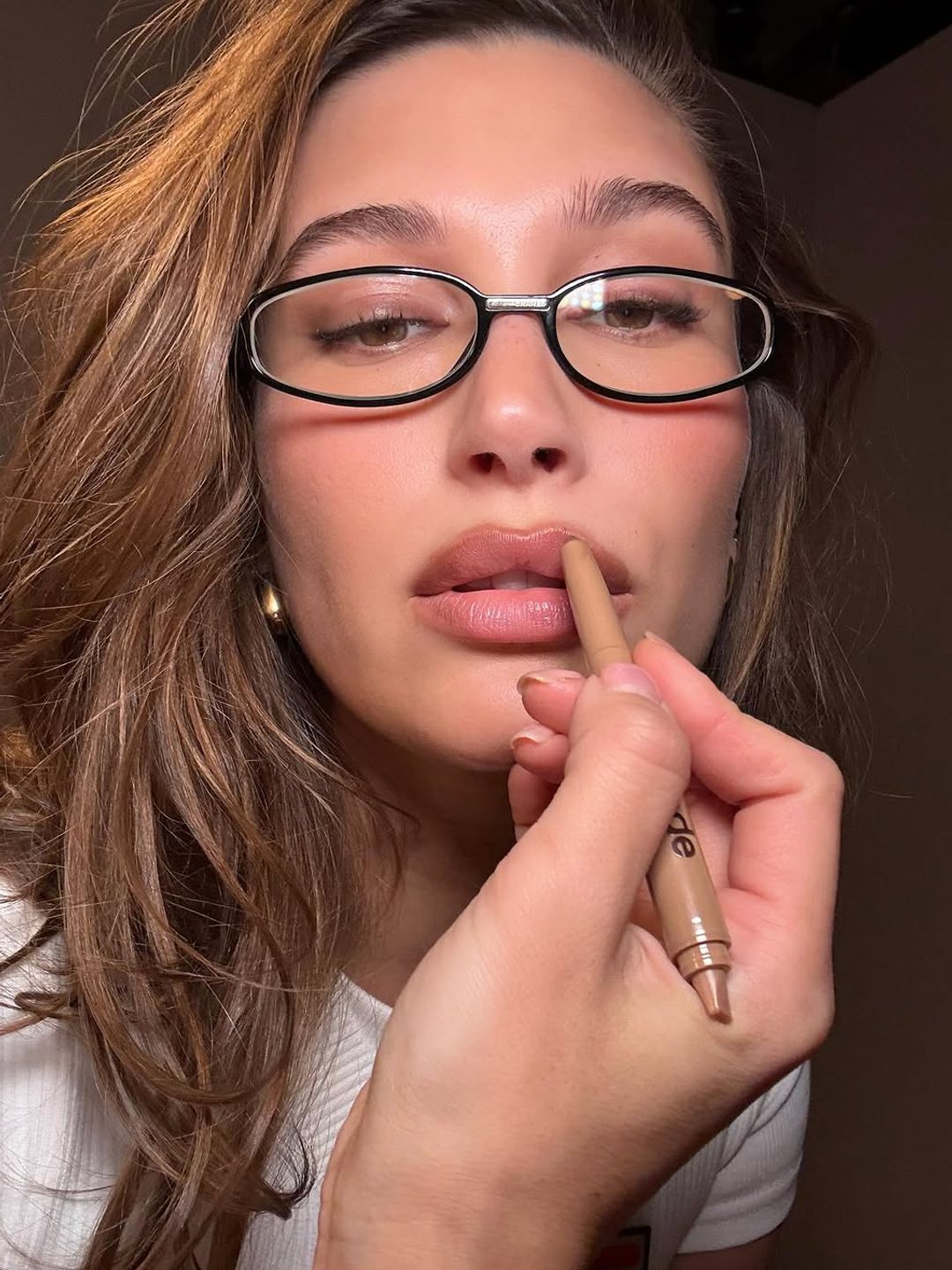
- Contouring the hairline by default: "It's a common mistake to automatically darken the forehead to mimic an oval shape," Reyes explains. "However, if you already have a small forehead, this type of contouring will simply make it disappear and completely throw your proportions out of balance."
- Over-highlighting the inner corners: Putting a touch of highlighter in the corners of your eyes is a hot trend, but here's a warning: applying too-heavy highlighter to the tear ducts of wide-set eyes will actually make the eyes appear even further apart, disrupting the natural focus of the face.
- Aggressively 'over-lining' your lips: A subtle over-line can give the illusion of fuller lips, but if you're too heavy-handed, you risk a look that feels artificial. It can distort the delicate distance between your nose and mouth, making the lower half of the face look unbalanced.
The Kim Kardashian effect
 © Instagram / Kim Kardashian
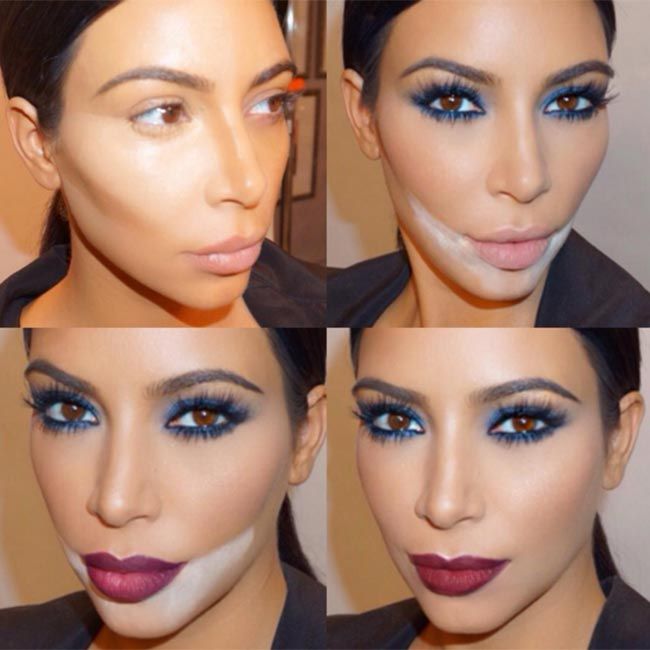
Viral trends frequently promote a "one-size-fits-all" approach that doesn't suit everyone. "Kim Kardashian effectively brought contouring to the masses - these were techniques that were once the best-kept secrets of the pros," Reyes says.
However, she strongly advocates for tailored advice over following the crowd. "Visagism is about the individual, not a fleeting trend. Booking in with a professional at least once to truly understand your own facial structure is the first real step toward mastering symmetry."
About the expert:
Reyes Tabarés is a renowned Spanish make-up artist and the founder of the Reyes Tabarés Make-Up Studio in Oviedo, Spain. With decades of experience in the fashion and film industries, she is a leading authority on visagism: the art of facial mapping.


