

Face sunscreen is undoubtably the most important step in our skincare routines. As well as providing instant results by preventing sunburn, it also reduces exposure to UVA and UVB rays all year round, which cause long term damage and accelerate the signs of ageing - think fine lines, wrinkles and sagging skin.
Thankfully, a good sunscreen will prevent this when applied correctly, and these days formulas are so advanced that many come with a whole host of other skincare benefits, too.
- Best mineral face sunscreen: Ultra Violette Future Fluid Superlight Mineral Skinscreen, £38 / $40
- Best face sunscreen to wear under makeup: Supergoop Unseen Sunscreen, £29 / $38
- Most affordable face sunscreen: La Roche-Posay Anthelios Ultra-Light Fluid SPF, £16.80 / $42.99
- The face sunscreen with added pollution protection: Murad City Skin Age Defense Broad Spectrum, £69 / $69
- The best moisturiser-sunscreen hybrid: Trinny London See The Light SPF 50+ Moisturiser, £46
If you're trying to decide on the best face sunscreen for you, there are several factors you'll want to take into account. These range from your skin type, how often you wear makeup, and whether you'd prefer a chemical or mineral face sunscreen.
So, what's the difference? Mineral sunscreen forms a physical barrier to help reflect UVA and UVB rays, while chemical sunscreens absorb UV rays, changing their chemical structure to reduce sun damage. Mineral is arguably more effective and lasts longer, but as it doesn't absorb into the skin it's harder to find a formula that feels comfortable, isn't visable and sits well under makeup.
To find the best face sunscreens on the market, I spoke to the Best Quality Designer Handbag shopping team about their favourite tried-and-tested formulas. I also got in touch with Dr. Murad, Board-Certified Dermatologist and Founder of Murad Skincare, for his expert opinion.
Should I be using face sunscreen daily?
"Everyone should wear a broad-spectrum sunscreen regardless of age, gender or skin type," says Dr. Murad. "Just because you don’t burn doesn’t mean you’re not receiving UV damage from ageing UVA rays. Many people don’t know that UV rays are actually present (and the same strength) all year round. Your collagen starts to break down after just 10 minutes of being outside, even on a cloudy day. You should also protect your skin from the inside by giving it the nutritional building blocks of good cellular health. Eat raw fruits and vegetables - the more colourful the better – because they are full of skin-protective antioxidants and have a high-water content. This helps keep your skin’s barrier hydrated and more resistant to free-radical damage from the sun and daily pollution."
Does the face sunscreen I should use depend on my skin type?
"All skin types need protection, even those with a darker complexion. Darker skin tones might not be as susceptible to skin cancers, but they are susceptible to the other hazards of sun damage like hyperpigmentation and free radical damage. I always recommend at least wearing a moisturiser with SPF, regardless of your skin type. The nose is actually the most common location for skin cancer – it makes up one third of all cases – so make sure it’s well protected and keep topping up your sunscreen when you’re out in the sun."
How should I apply face sunscreen? How often should I apply it?
"For each sunscreen application to the face, apply a measure of a squeeze along the full length of the index and middle finger daily - and continuously reapply every two hours when out in the sun for long periods of time. If you plan on swimming or being in water, apply water resistant sunscreen (such as Murad's Multi-Vitamin Clear Coat Broad Spectrum SPF 50) every 40 to 80 minutes for optimal protection. After swimming, perspiring or exercise reapply sun protection immediately."
How I chose the best face sunscreen
I've tested several sunscreens over the last few years and have spoken to the skincare obsessives on Best Quality Designer Handbag 's shopping team who have done the same. I also searched verified reviews online to find you the most-loved face sunscreens available to shop. I've included options suitable for a range of budgets and skin types, so there's something for everyone.
Best sunscreen for your face
1/10
Ultra Violette Future Fluid Superlight Mineral Skinscreen
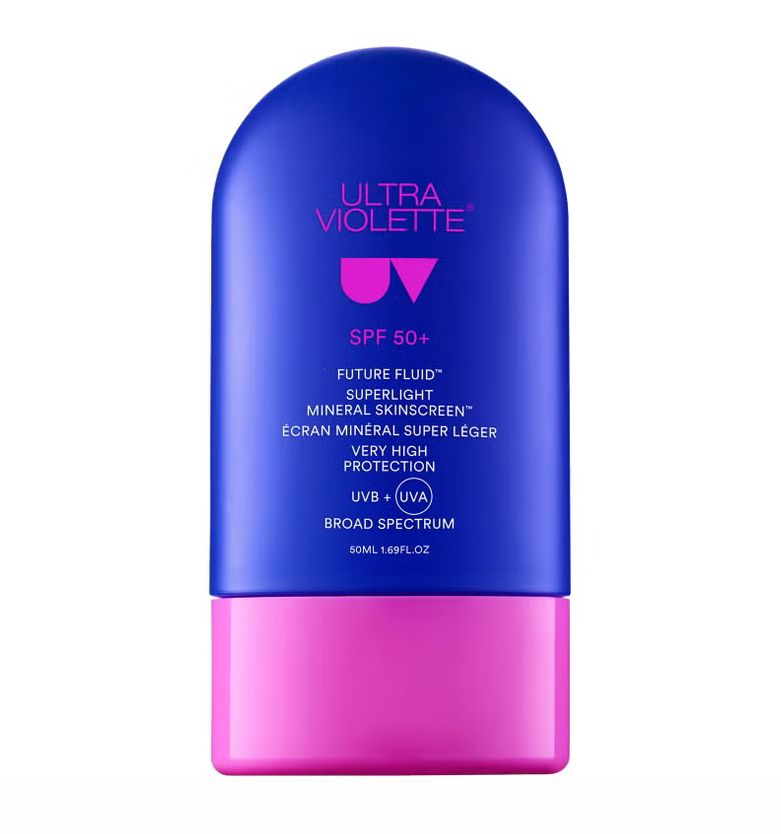
SPF: 50+
Mineral or chemical? Mineral
Why we love it: A mineral sunscreen without the traditional heavy feeling or chalky finish. It's super hydrating and the tint means it's amazing under makeup.
Hollie Brotherton, HELLO!'s Digital Luxe & Commerce Editor says: "I never used to be a mineral sunscreen kind of girl but Ultra Violette's Future Fluid changed that. I'd had it waiting in my collection for a little while when a facialist told me it was her new holy grail. She has flawless skin so I knew I had to try it and I wasn't disappointed. It has the most amazing silky texture and a subtle tint for a your-skin-but-better finish. It's designed with sensitive skin in mind and offers SPF 50+"
2/10
Supergoop Unseen Sunscreen
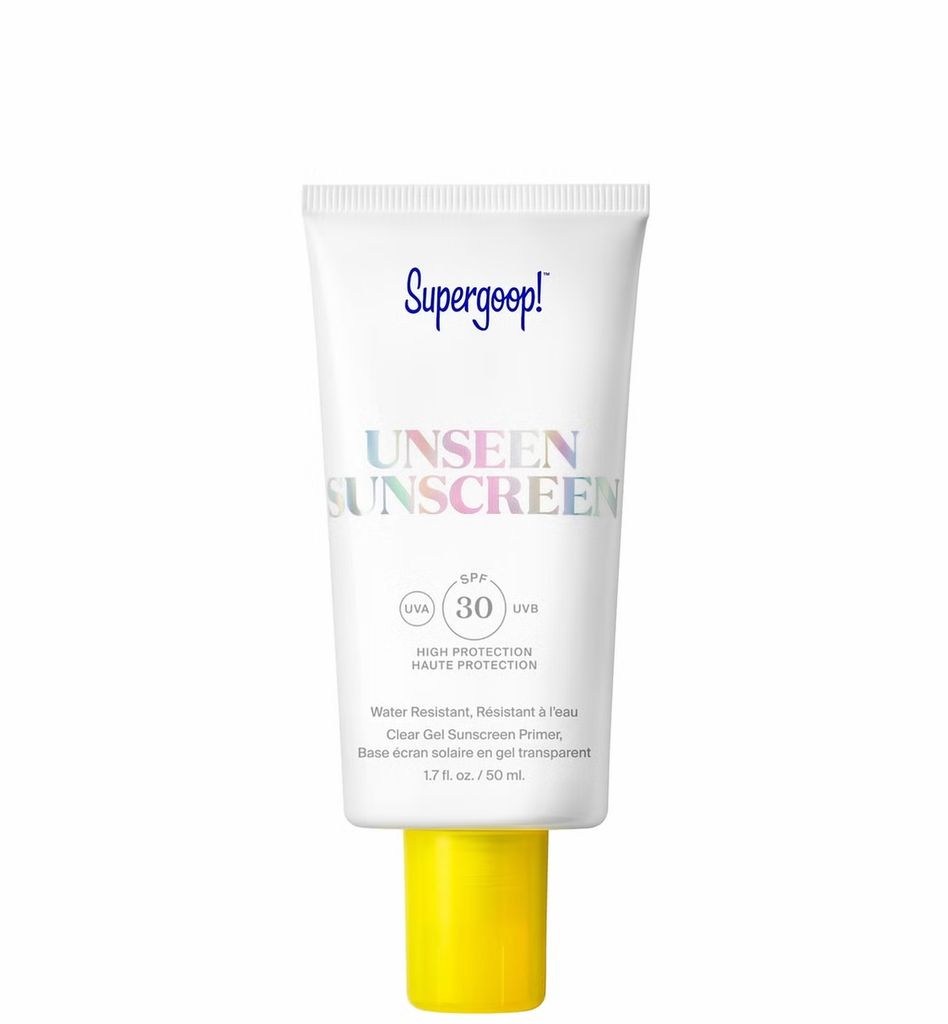
SPF: 30
Mineral or chemical? Chemical
Why we love it: Formulated with Red Algae Extract and Meadowfoam Seed Oil (full of vitamins and fatty acids) to hydrate and moisturise. No white cast and invisible under makeup.
Carla Challis, Best Quality Designer Handbag 's Commerce Partnerships Editor, says: "If I'm ever asked for a face SPF recommendation, I always suggest Supergoop. Not once has their SPF broken me out, or made my skin look greasy. I love the Glow Screen as it has a little tint to it, but I have the Unseen Screen too for layering under makeup as an SPF primer. There's no white film, and it actually makes my skin look better (it has an antioxidant-rich formula)."
3/10
La Roche-Posay Anthelios Ultra-Light Fluid
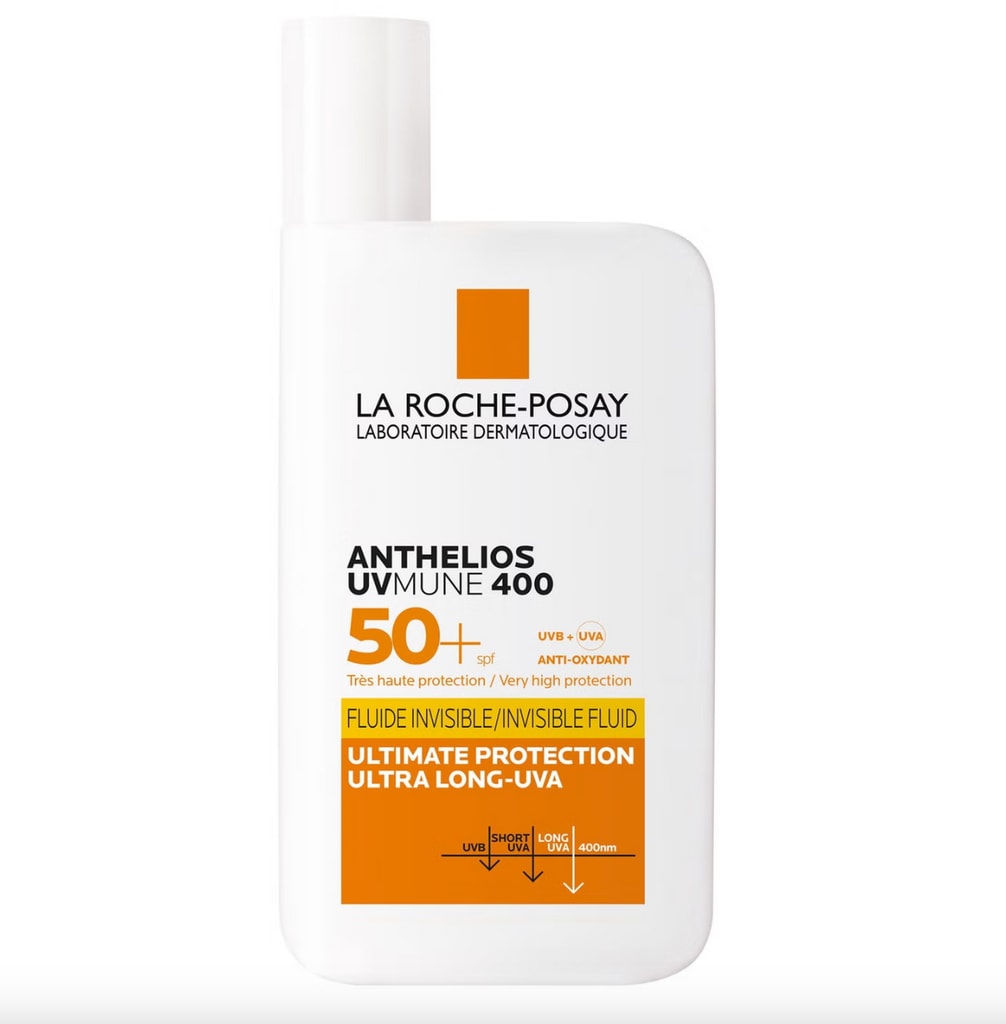
SPF: 50
Mineral or chemical? Chemical
Why we love it: Designed for sensitive skin. The price.
Developed with sensitive skin in mind, Anthelios contains the kind of minimalist ingredients you'd expect from French pharmacy brand La Roche-Posay. But it doesn't compromise on protection, going above Europe's recommended guidelines - this latest edition even helps to protect skin against damage caused by ultra-long UVA rays as well as UVA and UVB. Its lightweight formula is ideal for daily use.
4/10
Murad City Skin Age Defense Broad Spectrum
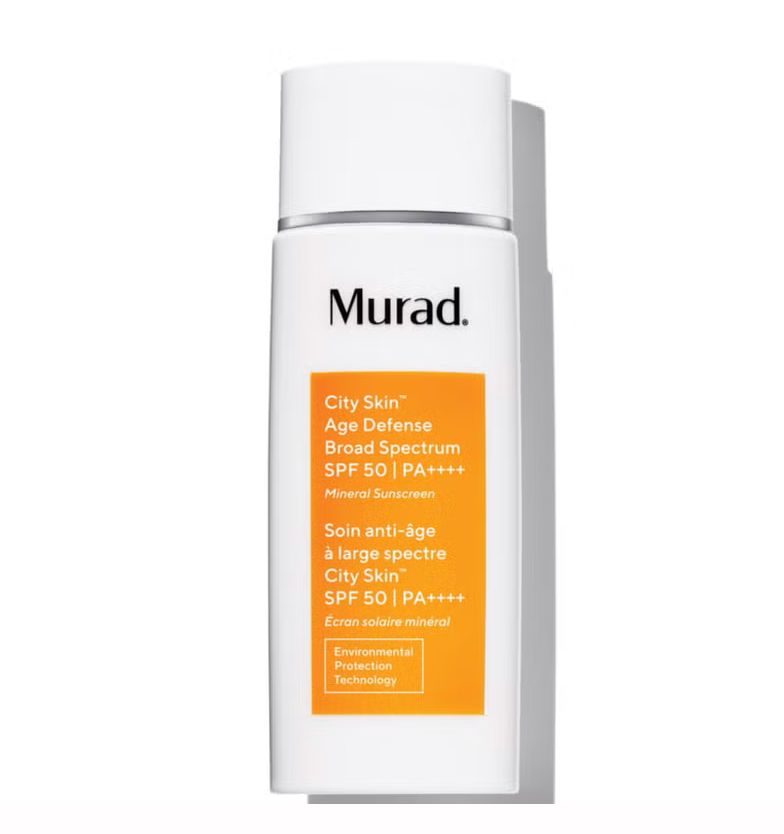
SPF: 50
Mineral or chemical? Mineral
Why we love it: Protects skin from UVA, UVB, pollution and blue light. Leaves your complexion brighter with a luminous, pearlised finish.
An icon for a reason, Murad's bestselling sunscreen shields against both pollution and digital blue light damage as well as UVA and UVB rays. It's ultra lightweight and undetectable under makeup despite delivering 100% mineral protection.
5/10
Trinny London See The Light
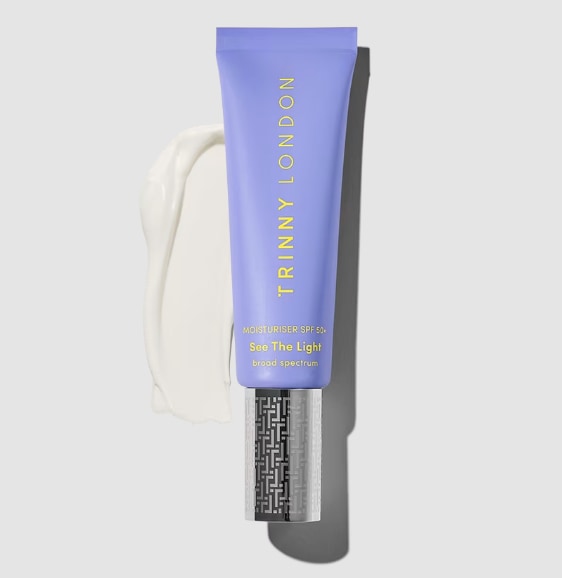
SPF: 50
Mineral or chemical? Chemical
Why we love it: Both instant and long-lasting hydration. Antioxidants from white tea leaf extract also provide protection from weather and pollution.
Hollie Brotherton, HELLO!'s Digital Luxe & Commerce Editor says: "Trinny's See The Light was one of the best new skincare products I tried in 2024. It's super hydrating without being greasy, and it absorbs almost instantly. I have an oily T-zone but a bit of setting powder is all you need to eliminate any shine if you're wearing it under makeup. It feels so nice on your skin, I was reapplying it constantly on holiday."
6/10
belif Super Drops Hydrating Sun Serum SPF 50+
 © belif
SPF: 50+
Mineral or chemical? Chemical
Why we love it: Hydrating, lightweight serum that leaves no white residue.
Powered by Haeyun Complex (3 types of Korean seaweed) and Panthenol, this super lightweight serum SPF protects and hydrates, leaving the skin feeling gorgeous.
7/10
Kiehl's Ultra Light Daily UV Defense
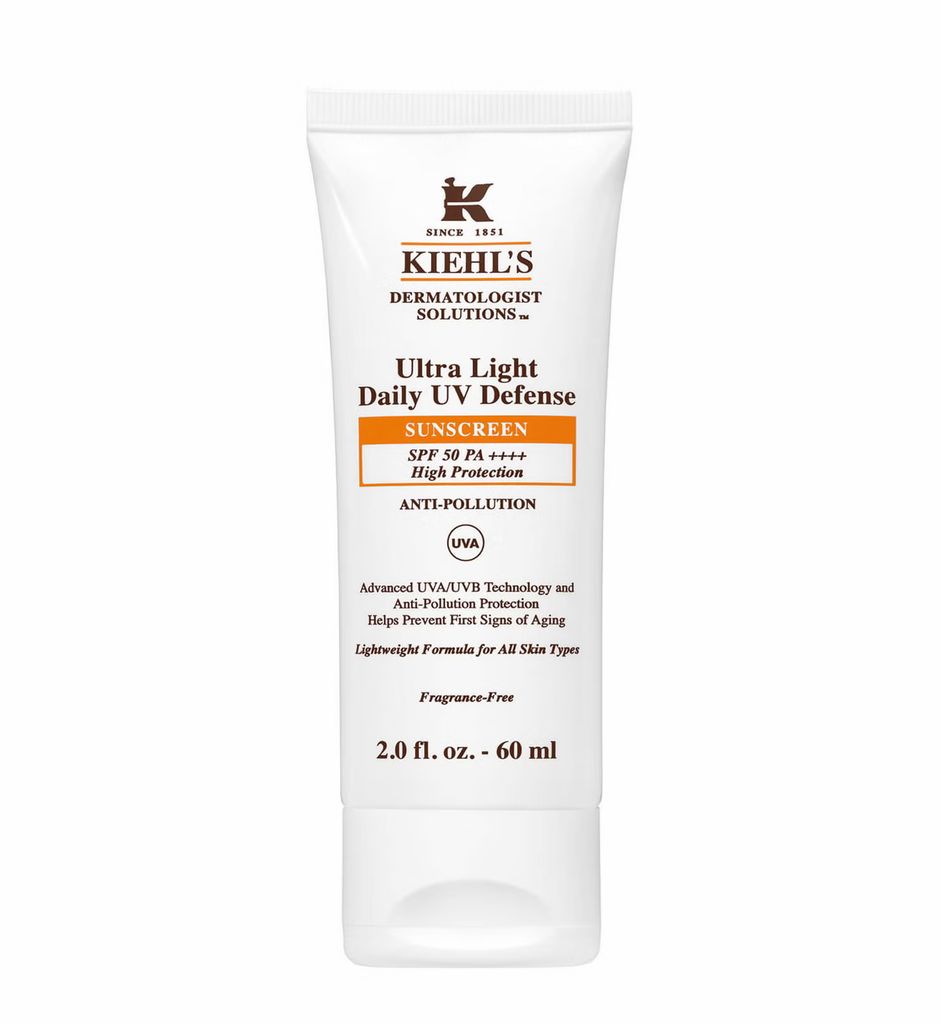
SPF: 50
Mineral or chemical? Chemical
Why we love it: Suitable for acne-prone skin with its non-comedogenic formula. Infused with Baicalin for added antioxidant defence. Matte finish.
Lightweight and fast-absorbing, Kiehl's face sunscreen is perfect for everyday wear as it's invisible under makeup. Non-comedogenic and fragrance-free, it's suitable for even the most sensitive skin and won't cause you to break out.
8/10
Tatcha The Silk Sunscreen
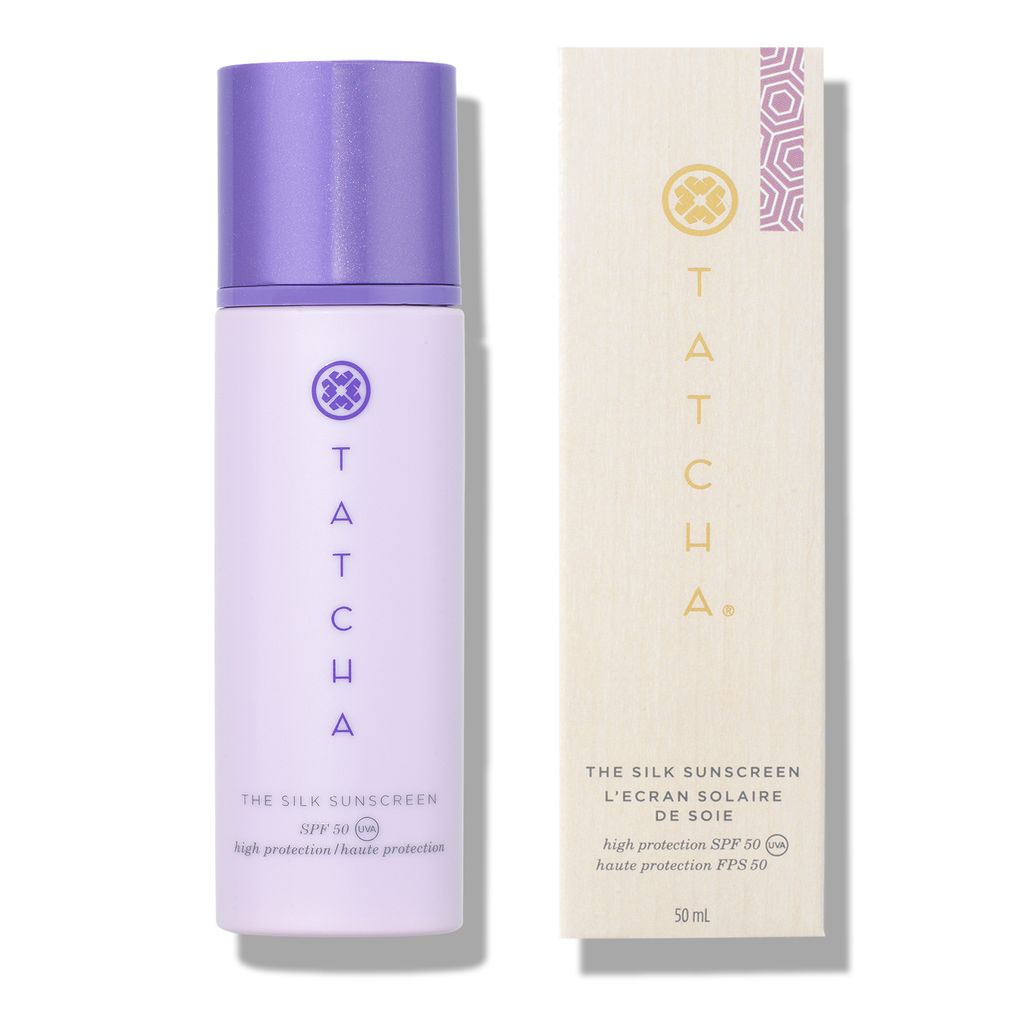
SPF: 50
Mineral or chemical? Mineral
Why we love it: Formulated with Zinc Oxide and Niacinamide for clearer skin, plus hydrating hyaluronic acid.
Leanne Bayley, HELLO!'s Lifestyle & Commerce Director says: "Tatcha's The Silk Sunscreen SPF 50 is incredible. It's super lightweight and blends seamlessly - FYI, it features zinc oxide to give a light-as-air feel to it. It also contains niacinamide and hyaluronic acid, which made my skin feel smoother, while also helping to minimise pores, reduce my redness and improve skin texture. It felt like a real luxurious step in my skincare regimen, giving a radiant 'Paris' filter-like finish. Great under makeup and good for top-ups throughout the day as well."
9/10
Malin + Goetz High Protection Sunscreen
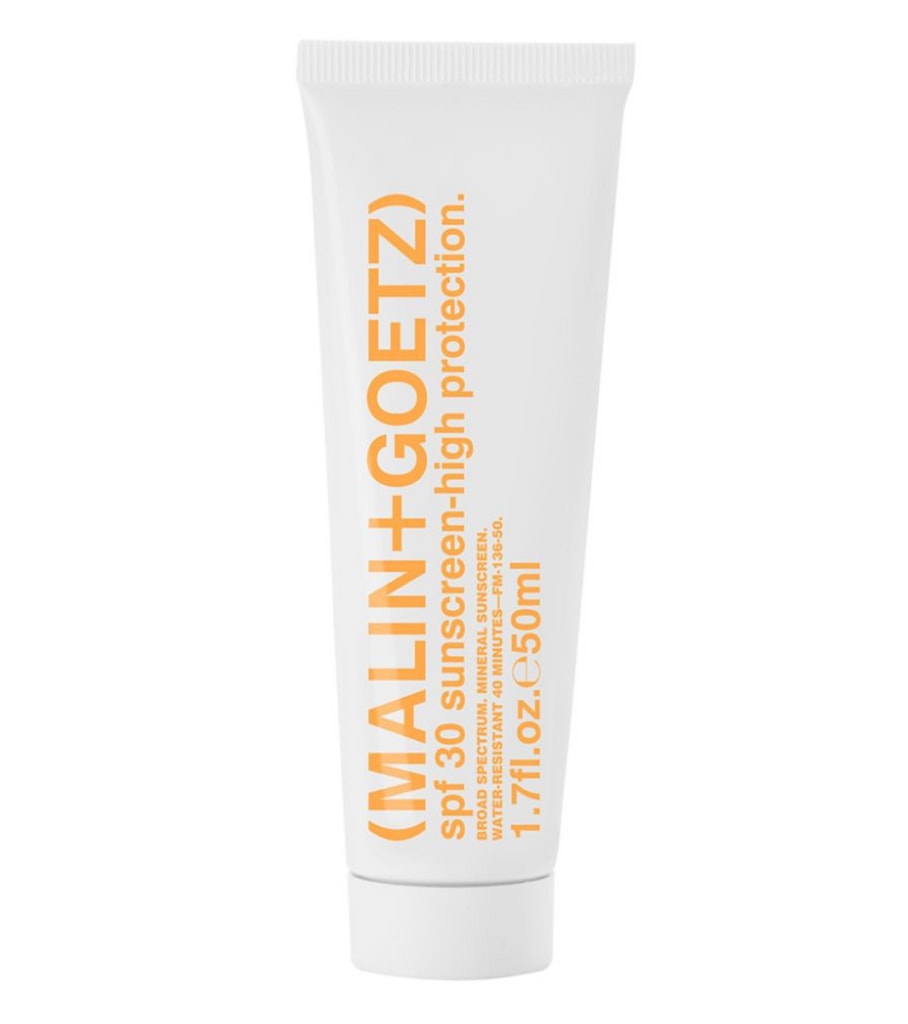
SPF: 30
Mineral or chemical? Mineral
Why we love it: Suitable for sensitive skin. Pollution & environmental protection as well as sun protection. Non-greasy.
If you have sensitive skin and you're looking for a mineral sunscreen, Malin + Goetz is another popular option thanks to its lightweight, non-chalky formula that doesn't leave any residue. It's brightening and hydrating and protects against environmental aggressors as well as UVA and UVB rays.
10/10
ZO Skin Health Broad-Spectrum Sunscreen SPF 50
 © ZO Skin Health
SPF: 50
Mineral or chemical? Chemical
Why we love it: Fresh, light texture. Fast-absorbing formula. Glowy finish to enhance your tan.
Carla Challis, HELLO!'s Commerce Partnership Editor, says: "This is great for those with very reactive or sensitive skin, as it really does shield the face from harmful UV rays. Natural melanin shields skin from ageing effects of high-energy visible (HEV) light, whilst the antioxidant blend protects skin from free radical damage and harmful infrared (IR-A) rays.
"Leaves skin with a gorgeous, glowing finish too."
Can I wear face sunscreen with other skincare and makeup products? What order should I apply them?
Dr. Murad says: "Antioxidants boost the effectiveness of your sunscreen by combating free radical damage which can be caused by UV exposure, pollution, blue light or infrared radiation, and lead to dullness, fine lines, wrinkles and pigmentation. Look for Vitamin C to brighten your complexion and reduce pigmentation. Since there is a limit to how much Vitamin C the body will absorb from food, it is important to bypass the body and deliver this potent nutrient directly to the skin.
"Applied topically, Vitamin C benefits the skin by preventing water loss and keeping the skin moisturised and supple. It promotes elastin and collagen, which are the main building blocks of the dermis and give the skin strength and resiliency. It also neutralises damaging free radicals, which can cause premature ageing, and increases the effectiveness of a topical SPF, protecting the skin from the sun’s harmful rays."
Does face sunscreen expire?
"Yes, it does. As a guide, don’t keep sunscreens from the year before as once opened they have a limited life span - so we generally recommend to replace sunscreens annually, particularly if they have been in your holiday beach bag and exposed to sunlight and heat. Ideally keep your sun cream in the shade and a cool place."


