

In the world of fashion, pearls have become synonymous with elegance and femininity, becoming, for those who wear them, the focal point of a face illuminated by these shimmering gems.
This symbolism transcends their mere beauty, revealing in classical mythology a close relationship between the goddess of love and beauty – Aphrodite for the Greeks and Venus for the Romans – and pearls, commonly described as the result of her tears.
Aphrodite and the origin of eternal elegance
 © Getty
Legend tells that Aphrodite was born from the sea foam when Cronus threw the genitals of the god Uranus into the ocean, emerging from a seashell. Pearls, then, are attributed to the goddess's tears at birth, and even to those she shed for love, which fell into the sea and became the gems that now adorn the heads of elegant European royalty.
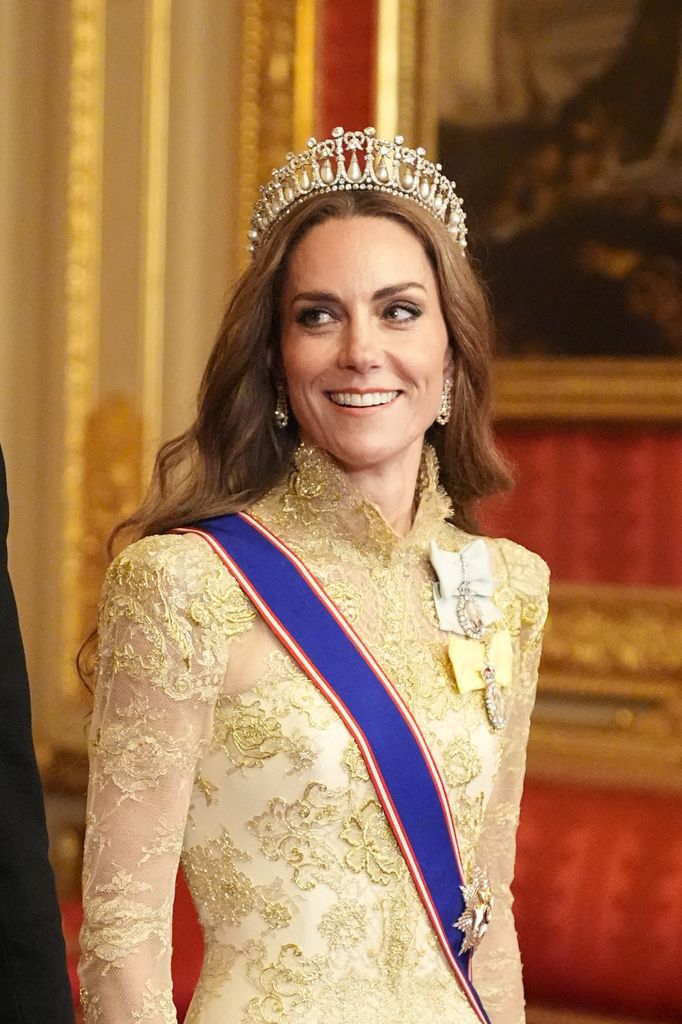
That is why, throughout history, they are the ones who manage to share, in a similar way, pieces that come to light in the most important moments, forming part of the most emblematic tiaras of the monarchies, such as the tiara of Queen Maria Cristina, which is now worn by Queen Letizia, or the Lover's Knot tiara, which the Princess of Wales wore for the first time in 2015.
The elegance of Monaco in the key of pearls
Far removed from the sophistication of the world's most renowned monarchies, Princess Caroline of Monaco has made pearls one of the most recognisable hallmarks of her style. It is on occasions when she has worn the Cartier tiara, adorned with pearl droplets, that the princess has truly dazzled.
 © UK Press via Getty Images
This piece dates back to 1920, when Princess Charlotte, Duchess of Valentinois, exchanged romantic vows with Count Pierre Polignac. Crafted in gold and platinum, and featuring large, teardrop-shaped pearls, it was worn by the iconic princess until she bequeathed it to her only son, Rainier III.
After the princess's death, the piece became part of the "Prince's Palace Collection," although it is not considered one of the jewels directly linked to Princess Grace, given the limited connection between Grace Kelly and Charlotte. Following the death of the renowned Hollywood actress, Princess Caroline has been the one to wear the piece most prominently, giving it a central role in a story told through this historic jewel.
Two styles, one tradition
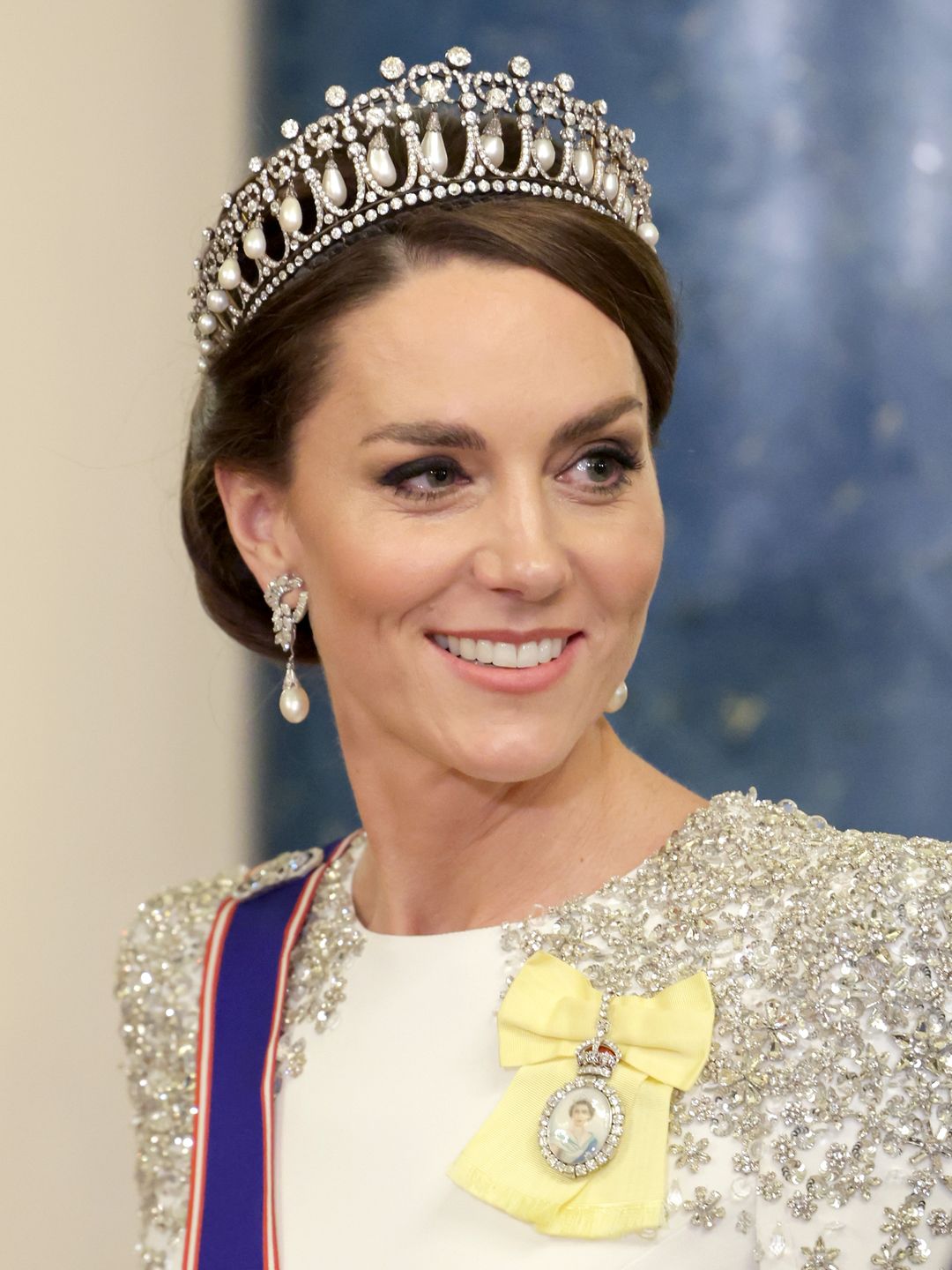
Queen Mary of Denmark and the Princess of Wales share a historical legacy through two pieces in which pearls play an essential role. These two tiaras, remarkably similar, indirectly share a timeless elegance. In Kate's case, the Lover's Knot tiara has become a staple in her wardrobe since December 2015, when Prince William's wife first wore it. This tiara, steeped in history, was also a favourite of Princess Diana, to whom it was given by Queen Elizabeth II.
 © Getty Images
It remained in storage after Diana's death until it reappeared years later on Kate's head. Its origins date back to 1913, when Queen Mary of Teck commissioned it from the House of Garrard.
 © Alamy Stock Photo
Queen Mary of Denmark, for her part, owns the piece, one of the few that can leave the country, as it is not state property, belonging instead to the private collection of the Danish queens. The Pearl Poire tiara dates back to 1820, when it was made for the wedding of Princess Louise of Prussia to Prince Frederick of the Netherlands. It passed into the Danish collection after the marriage of Lovisa of Sweden, granddaughter of Louise and Frederick, to the future Frederick VIII, and years later became one of Queen Margrethe II's favourite pieces.
The legacy of Maria Cristina in Queen Letizia
For her part, Queen Letizia has worn the iconic tiara on several occasions, a tiara that once belonged to Queen Maria Cristina. This pearl and diamond diadem, reminiscent of the elaborate tiaras of the Russian court known as kokoshniks, originally belonged to the mother of King Alfonso XIII and, after passing to Queen Victoria Eugenie, became part of the trousseau of Princess Maria de las Mercedes of Bourbon-Two Sicilies and Orléans in 1935 upon her marriage to Juan, Count of Barcelona.
 © Getty
Before the Countess of Barcelona's wedding, the King presented her with his most precious jewels. The woman who would become Juan de Borbón's wife wore one of these pieces at her wedding. Later, it passed to Queen Sofía, as a loan, and, although there is no confirmation from the Zarzuela Palace, it is believed that after the Countess of Barcelona's death, it passed to King Juan Carlos. This explains why the Queen dazzles on the most solemn occasions, wearing the most precious pearls from the royal collection.
When pearls reach their 'Maximum' expression
Queen Máxima, through her jewellery collection, is cementing her status as one of the most iconic figures at gala dinners. Máxima never disappoints, enhancing, through pearls, the styles that have established her as one of the most influential queens in the world.
In her case, pearls take centre stage in several pieces, although it is the Württemberg tiara that stands out in an impressive collection of historic jewels. The tiara, originally worn by Queen Wilhelmina, has been used on the most significant occasions for the House of Orange.
 © Getty Images
A tiara that owes its name to the fact that it was believed to have belonged to Queen Sophie, the first wife of King William III of the Netherlands, born Princess of Württemberg, who received it as a wedding gift from her father in 1839.
An imposing piece crafted from antique diamonds, with a distinctive scroll design and fleur-de-lis motifs, it is crowned by five natural pearls, leaving a legacy now inherited by Queen Máxima. A testament that, among royalty, is passed down through elegance, highlighting, now more than ever, a classical mythology in which pearls symbolise both sorrow and love.


