

A strong back is a healthy back. This principle is the cornerstone of the philosophy shared by Victor Diaz, a fitness and sports science specialist. Explaining why your back musculature is the "engine" of your body, his message is clear: back and spine health is not just about aesthetics - it is a vital requirement for a pain-free life.
"Looking after your back is key to keeping your posture sharp, preventing chronic pain and ensuring you feel your best every single day," Diaz explains.
And when it comes to exercise and sport, he says, a resilient back acts as a shield against injury and directly boosts performance, too. To help you transform your home routine, he has compiled a definitive list of eight science-backed exercises designed to stabilise the spine and build lasting strength.
If you want to move better and feel stronger, you'll want to take note of these pro tips...
Essential mobility: Waking up your spine with cat-camel and thoracic rotations
Start by doing these exercises to mobilise the entire spine.
Cat-Camel
 © Getty Images
- Start on all fours with your knees under your hips and your hands under your shoulders.
- Mobilise your spine by initiating the movement from your pelvis.
- Inhale as you round your spine and feel your back expand, exhale as you return.
- Perform 8-10 controlled repetitions.
Thoracic Rotations
- Continue on your hands and knees.
- Place one hand behind your head and guide your elbow towards the ceiling with a controlled movement.
- Perform 6-8 repetitions on each side.
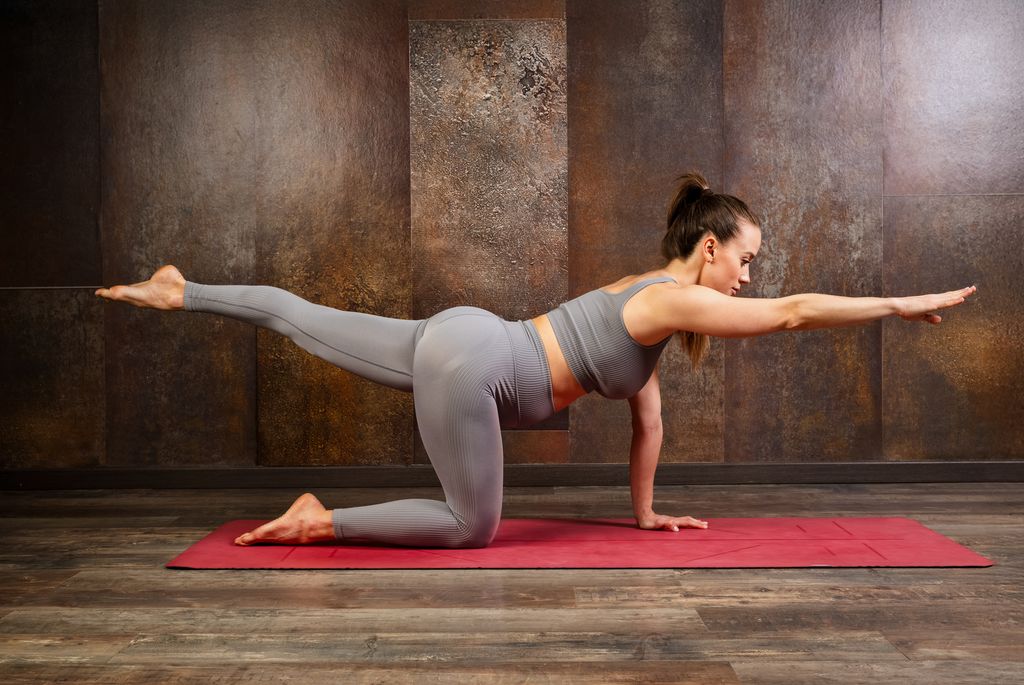
Core stability secrets: Mastering the Bird-Dog for spinal support
 © Getty Images
- Start by remaining on all fours. Your hands should be placed directly beneath your elbows and shoulders.
- Extend your opposite arm and leg, maintaining control over the lumbopelvic area.
- Alternate the extension on both sides.
- Perform 12 repetitions per side, alternating legs.
Strengthening the posterior chain: Resistance bands, glute bridges and deadlifts
 © Getty Images
- Stand with a resistance band held between your hands, arms extended in front of you, with palms facing the ceiling.
- Pull the band towards your chest, causing a scapular retraction, and return to the starting position in a controlled manner.
- Perform between 10 and 15 repetitions.
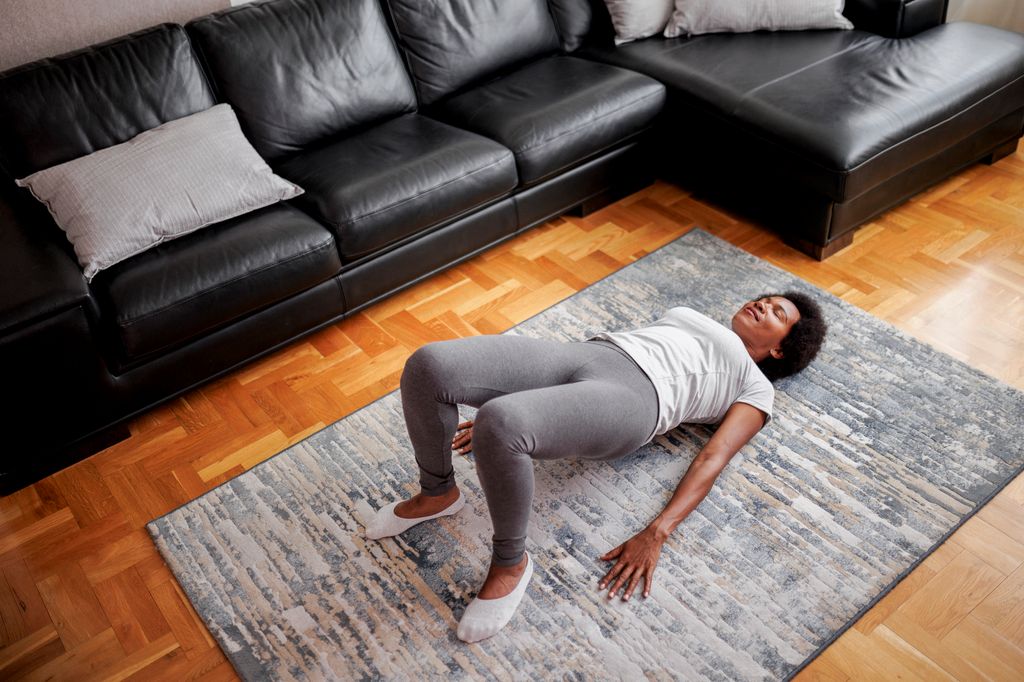
Glute Bridge
 © Getty Images
- Lie on your back with your legs bent and feet flat on the floor.
- Perform a hip extension to lift your glutes off the floor.
- Perform between 10 and 15 repetitions; don't forget to inhale as you lower and exhale as you lift.
Deadlift
The deadlift is one of the fundamental exercises for developing muscle mass and achieving a great stimulus throughout your entire posterior chain.
Note that this is an exercise that is much more hip-dominant than knee-dominant.
- Hold a dumbbell in each hand and flex your hips, leaning your torso forward while keeping your back straight.
- Descend until you reach a position where your hips are below the height of your shoulders but above the height of your knees.
- Perform between 8 and 10 repetitions.
"Looking after your back is key to keeping your posture sharp, preventing chronic pain and ensuring you feel your best"
Remember: it's important to maintain a neutral spine throughout the entire movement, and extend your knees and hips simultaneously on the way up to return your body to verticality.
Advanced muscle toning: The Dumbbell Row and Pull Over
 © Getty Images
Dumbbell Row
- Stand, performing a hip hinge while keeping your spine stable.
- Hold a dumbbell in one hand and support yourself on a fixed surface with the other hand to generate force from a more stable position.
- Pull the dumbbell towards your hip and control the descent to return to the starting position.
- Perform 8-10 repetitions per side.
Pull Over
- Lie on a flat bench with your feet planted firmly on the floor. Hold a single dumbbell with both hands directly over your chest, arms extended upward with a slight bend in the elbows.
- Move the dumbbell backwards, aiming towards the floor in a controlled manner, avoiding arching your lower back.
- Engage your core to keep your lower back from arching, then use your chest and back muscles to pull the dumbbell back to the starting position.
- Perform between 10 and 15 repetitions.
About the expert:
Victor Diaz (@prohealth.vd) is a Madrid-based Sports Science expert and personal trainer.


