
There are gestures that don't make a sound, but hold up the world. Caring for someone close to us—usually our elders—is more than just an act of love: it is immersing oneself in a story that isn't always chosen, but always transforms.
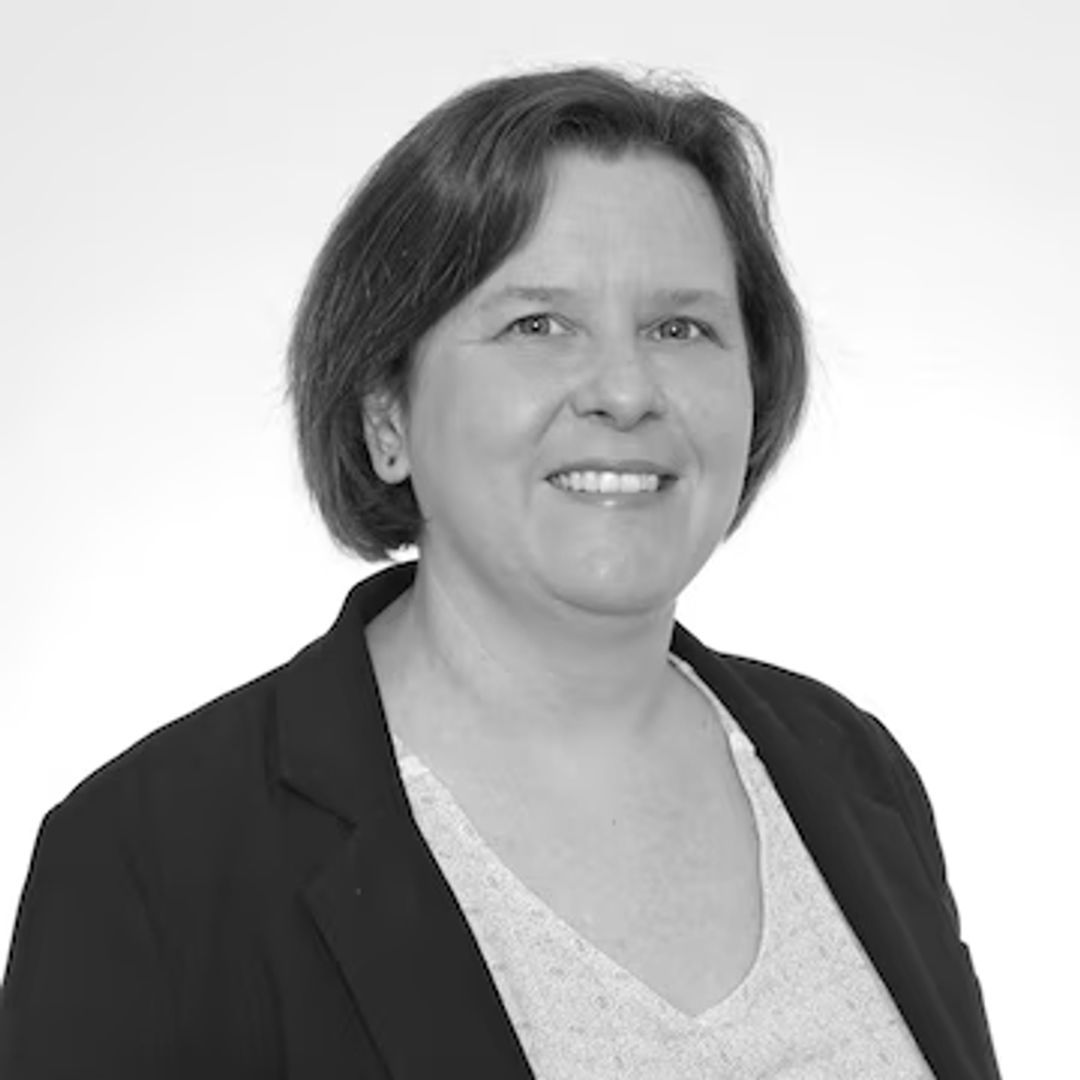
This is why Dr Javier Yanguas, a doctor of psychology and one of Spain's leading experts in gerontology, has written a book about caregiving from a very personal perspective.
Through the lens of his own experience as a therapist turned caregiver himself, he explores the act of taking care of a loved one—as everyday as it is profound—which is rarely given the recognition and value it truly deserves.
After all, it is a story we all belong to: those of us who care, those who used to care, those who will care in the future… and those who will one day need care themselves.
 © Getty Images
What led you to write your book, When Volcanoes Age (Cuando los volcanes envejecen)?
"Professionally, I have spent many years working with caregivers of people living with Alzheimer's disease and other forms of dementia. On a personal level, my sister and I also had to care for my mother, and that was when I realised the enormous gulf between theory and practice.
"There is a huge difference between advising a client in your office on how to look after a relative with dementia and the actual reality, which is so much harder... It is a largely unknown journey that is rarely taken into account and deeply undervalued. It leaves a lasting mark on you"
"I realised that I hadn’t fully understood—that I had advised so many people, so many times, without truly grasping it. It gives you the sense that you know a fair bit about a subject when, in reality, you don’t actually know that much at all.
"So, I took the opportunity to take notes throughout the entire process of looking after my mother, and my book was born from that: from the need to tell the story of caregiving. What I have done is gather stories I know from others who care for their loved ones, alongside my own experience. I wanted to give a voice to the experiences of so many people—principally women—who cannot write their own care stories."
How has your perspective on ageing changed after your personal experience of caring for your mother?
"More than anything, it is my perspective on caregiving itself that has shifted. I truly believe it is a transformative experience... Being so close to vulnerability, fragility, pain and human limitations changes you. Honestly, I think it changes you for the better, because it provides a snapshot of real life and forces you to live with much greater depth.
"I now see that ageing is not easy. Before this, I had a lighter, perhaps less profound view of it. But getting older is tough. Adapting to loss is always a deeply complicated process."
 © Getty Images
To a greater or lesser extent, we will all care for someone or be cared for ourselves. Are we prepared for it?
"I don't think we are prepared for caregiving at all. I think we flee from anything that hints at vulnerability, fragility, illness or dependency—we try our best not to think about it. We don't like to face the difficult things in life. I think we need to refocus this; we must understand that living life fully also means accepting that life is finite. It means knowing that one day we will need help from others and truly embracing our interdependence."
Is our increasingly individualistic society a major barrier in this regard?
"For many years now, we have clearly been transitioning away from community-based societies towards a more individualistic way of life. It's a world where interdependence feels almost clandestine, and where we constantly repeat the first person singular: I, me, mine, with me—leaving very little room for 'us'. We have been living like this for a while, and it feels as though values like commitment and reciprocity belong to another era entirely.
"I believe that the situation we currently find ourselves in is largely a consequence of losing these deep connections, and it is something that concerns me deeply... Ultimately, everyone in life ends up needing others and, because of that, we ought to take much better care of our relationships."
"We desperately need to reclaim that first person plural—the 'us'. Standing alone, only worrying about oneself, leads absolutely nowhere"
What role do you think society plays in the way we treat older people?
"It plays a completely crucial role. We tend to view old age as an unimportant chapter of life—as a sort of 'afterthought'. It often feels as though later life is treated as entirely dispensable. Yet today, thanks to investments in healthcare, research, and improving our overall well-being, old age can easily last 25 or 30 years—stretching from 65 to 90 and beyond. That is easily a quarter, if not a third, of our entire lives."
"I believe we cannot simply dismiss old age... We must treat older people as the adults they are—with true dignity and respect. We certainly cannot continue to violate the rights of older people as we currently are, and it is time to see later life for what it truly is."
 © Getty
What do you believe is the greatest challenge caregivers face?
"They face so many. Caregiving is not easy at all. There is the practical side, which involves the physical tasks themselves: helping them wash, dress and eat. But it is also incredibly difficult in ways that aren’t so obvious—such as no longer being able to truly communicate with the person you love, or coping with behavioural changes like jealousy, wandering and irritability. In cases of dementia, for example, these behavioural challenges are very common.
"Beyond that, I believe there is a third, deeply complicated layer. It has to do with emotion... If you are a caregiver with children, you might feel guilty that you rarely see them, or that you are neglecting your partner. This often breeds a sense of deep ambivalence: you love your mother, father or partner whom you are looking after, but at the same time, you desperately wish it would all just end.
"Old age isn't just a residual leftover period; it is a rich life stage made up of very different chapters, where life obviously still holds all the meaning in the world"
"These feelings are incredibly heavy to carry, which is why caregiving spans so many different spheres. Sometimes society focuses entirely on the practicalities: changing nappies, or the physical act of getting someone into and out of bed. But the truth is, I think it's the other things—the guilt, the ambivalence, the loss of communication and the feeling that your own life project is going down the drain—that are by far the hardest to bear.
 © Getty Images
Do you think we fail to give caregiving the value it truly deserves?
"Without a doubt. One of the main reasons I wrote this book is because caregiving is silenced. It lacks a sense of the epic, it is still dismissed as 'women's work'—for a thousand reasons. Yet it is completely clear that care is what holds this society together. It is blindingly obvious that a massive problem is heading our way as the baby boomer generation reaches later life.
"A complicated layer of caregiving has to do with emotion—with the sheer burden of it all, feeling as though it is simply too much to bear, and having to put your own life plans on hold because you have to care for someone else"
"Many of these people who need care have very few children, or no children at all. They are going to need care very soon, leaving us with a major societal crisis. I have been working in this field for many years, and I notice that as the years roll by, caregiving never becomes a political priority. In my view, caregiving and our outlook toward the most vulnerable should be treated as a matter of urgency."
From your personal experience, when you become a caregiver, your entire world revolves around that reality. Do you think it is necessary, at times, to step back, take a breather, and then keep going?
"I believe there is a universal plea among all caregivers, which is the desire to balance your own life plans with the act of caring. Until now, we have held a view of caregiving where looking after someone meant absolute, total devotion—and I think that is asking too much. Stepping back is necessary, taking a breather is vital, and I believe that the demand to combine a personal life with caregiving is absolutely legitimate and necessary."
 © Getty Images
Traditionally, it has been women who have assumed the role of caregiver. Has this taken a toll on other areas of their lives?
"Absolutely. This is an undeniable reality. I remember when I first started working with older people many years ago, back in 1988. I asked a woman, 'What do you want to do with your life?', and she replied, 'I want my daughter to pass her exams,' or, 'I want my son to find a job.' And I said to her, 'That is what your children want—but what do you want for yourself?'
"I believe men have stepped up when it comes to looking after our children, but not when it comes to looking after our elderly parents—and we need a deep rethink on that"
"So many women have struggled to know what their own lives look like beyond their devotion to others. That is the exact toll it has taken on generations of people. In this sense, we have asked far too much of them, and I think, honestly, we men need to take a long, hard look at ourselves. Believing that caregiving is solely 'women's work' is entirely wrong; it desperately needs to be balanced. "
People even speak of 'caregiver burnout'. Is it difficult to handle the physical and emotional toll that caregiving entails?
"It is widely studied, and in Spain, we actually have some of the world's leading research and care groups specialising in this. Every professional working in this field has focused on this issue. It is one of the absolute hotspots for physical and emotional overload, stress and overwhelming guilt. Obviously, we often cannot cope alone and we need to ask for help."
 © Getty
Do you think it is important to promote a more positive vision of ageing?
"Rather than a 'positive vision', I think we need a realistic one. We have to understand that ageing isn't just a single phase; there are many different stages within later life. The first phase is essentially an extension of adulthood. It can be a wonderful stage of life, provided you are in a good position financially and in good health. But from your mid-80s onwards, fragility sets in. That is when vulnerability appears, and that is where we require much more support and help.
"It is incredibly tragic when a caregiver has to look after someone entirely on their own. That sense of isolation is terrible"
"We need to align our perspective with that reality. Ageing is defined by heterogeneity and diversity; many beautiful things happen as we get older, but there is also loss, fragility, illness, and ultimately, death. But that is simply the nature of human life. What we cannot do is pretend that being 70 is the same as being 20. It just isn't. Being 70 can be marvellous, but it is still 70. We need to ground ourselves in realism. Within that realistic framework, staying positive is incredibly valuable—but we mustn't lose our grip on reality."
What advice would you give to those who are just beginning this journey of caring for a close elderly relative?
"I would tell them to seek companionship and support—do not go through this alone. And, to the extent that you can, prepare yourself. I would advise them to try to find a balance, making their personal life and their caregiving responsibilities compatible. They need to know they are not alone. We have to be aware that life sometimes throws us into these situations, and we must try to use them as an opportunity to become better people, to grow, and to understand life more deeply.
"I would also ask them to be gentle with themselves, reassuring them that they are going to feel things they have never experienced before—such as those feelings of ambivalence or guilt I mentioned earlier. They must understand that this is entirely normal and natural when you are going through such a stressful process. Ultimately, I would tell them to commit to the care of their loved one, but to be compassionate with themselves, too—and learn to forgive themselves."


