
I took up fasting years ago, and almost immediately, my cycle went haywire. I naturally put the delays down to perimenopause, but after digging into the research, I found my 'lightbulb' moment.
It turns out that all those glowing promises about intermittent fasting were based on studies done almost exclusively on men. We're often told women are too 'complex' for clinical trials, but that's no excuse to treat results for men as gospel for us.
Everyone's talking about intermittent fasting at the moment - probably because it sounds so simple - so we're seeing much less about eating a proper breakfast the second you wake up whether you're hungry or not. But what started essentially as a return to ancestral eating habits has turned into a bit of a competition.
Whether it's 12, 14 or 16 hours, it feels like everyone’s trying to out-fast each other. So, the big question remains: is fasting actually doing us any good during midlife?
Why the 'skipping breakfast' trend may be backfiring on your hormones
Intermittent fasting is often hailed as a brilliant way to fire up the metabolism, which feels particularly urgent at a stage when shifting hormones seem determined to settle around our midlife tummies and hips. Sound familiar? But the truth is, fasting isn't a one-size-fits-all solution for every woman.
 © Getty Images
Even if you're still ovulating occasionally, fasting can throw your delicate hormone balance out of kilter. While it can give the metabolism a much-needed boost for some, for others, it might actually make those pesky perimenopause and menopause symptoms even worse.
Why you're feeling more 'on edge' while fasting
This is something you're probably wondering about, particularly if you're currently dealing with oestrogen-progesterone imbalance, insulin sensitivity or persistent fatigue. In these cases, skipping breakfast might be the very last thing your body needs if you want a stable mood.
On the flip side, if your metabolism has taken a hit from a diet high in sugar, or if you have a history of conditions like polycystic ovary syndrome (PCOS), fasting could be the key to restoring balance.
"There are times when healthy starches are a necessity, and prolonging a fast during hormone spikes isn't a good idea"
When we follow a diet heavy in carbohydrates or ultra-processed foods, especially first thing in the morning or late at night, moderate intermittent fasting can be a brilliant tool for dampening those insulin spikes. In those cases, it may help to stay hungry longer, curb the urge to snack and significantly improve your insulin sensitivity.
Stop 'pushing through' hunger: When fasting becomes a stressor for your body
During the transition into menopause, oestrogen and progesterone levels can fluctuate erratically. This means there will be days when your body actually craves a higher intake of complex starches, particularly if you’re noticing increased sensitivity, insomnia, anxiety or mid-afternoon energy dips. On those days, forcing an extended fast could actually intensify your symptoms.
Furthermore, intermittent fasting can knock the circadian rhythms of key hormones - such as insulin, glucocorticoids and thyroid hormones - out of sync, which quickly shows up in your mood, energy levels and even your skin.
 © Getty Images
There is an evolutionary reason for this sensitivity: the body interprets fasting as a sign of scarcity, which can stall the production of reproductive or regenerative hormones.
If you're already navigating a hormonal imbalance, as is so often the case during menopause, the negative impact of fasting can be even more pronounced
A study by the University of Illinois Chicago (2022) found that intermittent fasting reduced Dehydroepiandrosterone (DHEA) levels by 14% in both pre- and post-menopausal women.
Since DHEA is a precursor to oestrogen and testosterone, and already declines naturally with age, an additional drop in those numbers could have real implications for your energy, mood and muscle mass. The research suggests that fasting must be tailored to a woman’s specific hormonal status rather than followed as a blanket rule.
The 12:12 Rule: Why 14 Hours Might Be Your Breaking Point
Intermittent fasting can be approached in several ways: either by restricting food to certain windows of the day (usually by skipping breakfast or dinner) or by significantly lowering your intake on specific days of the week.
For many women navigating menopause, the most intuitive approach is to fast for between eight and 12 hours, spanning from the final meal of the evening to the first bite the following morning.
 © Getty Images
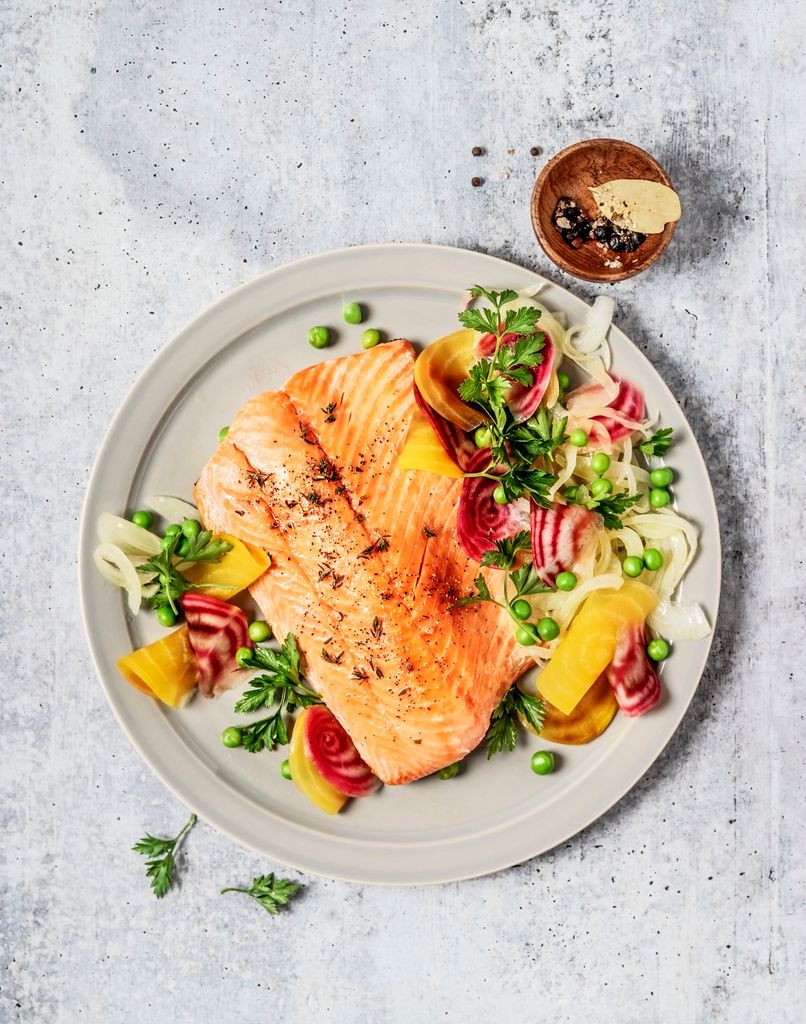
A prime example of a 'gentle fast' would be finishing dinner and not having breakfast until 12 hours later. This can easily be tweaked to suit your routine, simply by bringing your evening meal forward or delaying your breakfast.
However, it's worth noting that the latest research suggests that once you pass the 14-hour mark, the benefits of fasting can begin to dwindle for women - particularly during this sensitive hormonal transition.
9 golden rules for fasting safely during menopause
1. Start slowly with the 12:12 method: Aim for 12 hours of fasting and a 12-hour window for your meals. This is a gentle way to ease in without sending your hormone balance into a tailspin.
2. Tailor your fast to your energy levels: If your cycle has become unpredictable, let your energy, sleep quality and mood be your guide. Steer clear of long fasting windows if you’re struggling with fatigue, insomnia, or anxiety.
3. Listen to your body: If you’re feeling ravenous, weak, irritable or constantly chilly, it’s a clear sign that it isn't the right time to fast.
4. Don't pile on the pressure: Fasting is a form of physiological stress. Avoid combining it with high-stress periods, a lack of sleep or grueling workouts, as this can further disrupt your hormonal system.
5. Break your fast with 'real' food: Prioritise high-quality protein, healthy fats, and complex starches like sweet potato, brown rice, or pulses. Steer well clear of ultra-processed snacks.
6. Stabilise first: If you’re navigating significant hormonal shifts, intense mood swings or chronic insomnia, focus on finding your balance before introducing fasting into the mix.
7. Recognise that fasting isn't for everyone: If you notice symptoms like hair thinning, disrupted sleep, or 'brain fog' that won't lift, your body is telling you this isn't the right time.
8. Seek medical advice: Speak to your doctor if necessary. Women who are underweight, have a history of disordered eating or live with chronic illnesses should never attempt fasting without professional medical supervision.
9. Prioritise nourishment over restriction: The ultimate goal is to give your body exactly what it needs - nutritious, satisfying food.
About the expert:
Nutritionist and naturopath Andrea Carucci is author of the Spanish language books SOS, Menopause is on the Horizon, What Do I Do Now? (SOS, menopausia a la vista, ¿y ahora qué hago?) and The Fertility Kitchen (La cocina de la fertilidad).


