
We're all becoming more aware of how important it is to look after ourselves. It's fundamental if we want not just to live longer, but more importantly, to live well. Yet, it's easy to feel overwhelmed by the sheer volume of advice that's out there: supplements, fad diets, superfoods and endless wellness routines.
That's why physiotherapist, author and anthropologist Ana Galeote wants to strip away the noise and help us return to the essentials. The expert travelled to Okinawa, Japan, the famed "island of centenarians", to discover how so many people there live well into their 90s and beyond with such independence and vitality.
What she found weren’t secret potions or mystical techniques, but something far more powerful: simple habits, daily movement, and the strength of community. And, she does some myth-busting, including the need to do 10,000 steps a day.
This interview takes us on a journey through the human body to understand how we can truly care for it to add more years to our lives, and more importantly, add more life to our years.
You talk about simple habits to add years to our lives. In your opinion, which is the hardest one to actually stick to?
Honestly, the toughest one is deliberately stepping outside your comfort zone. Walking more, working on your mobility, breathing properly... these are all things that feel great once you’ve got into the swing of them. But building up that mental grit - doing what’s best for you even when you really don’t want to—is incredibly hard to put into practice.
That said, it’s the habit that underpins everything else: it's what gets you off the sofa, into your trainers, and through the gym doors. It’s about having the discipline to say "no" to the things that drain your health. It might not be the most flashy habit, but it’s certainly the most transformative.
If someone could only manage one change to start with, which habit would you recommend they pick first?
I’d start by simply upping your step count. It’s easy, it's free, and it's accessible to almost everyone. We know that increasing your daily movement from 2,000 to 2,500 steps already cuts the risk of all-cause mortality by 8%—and at around the 8,800-step mark, that risk drops by nearly 60%.
There's no need to get obsessed with 10,000 steps; you just need to do a bit more than you did yesterday. Walking improves your heart health, your metabolism, your mood, and even your brain power. Rather than waiting for the "perfect" routine, I’d much rather see someone just get out the house and go for a walk every day.
Changing habits isn't easy, though, is it?
No, it's not - and anyone who tells you otherwise isn't telling the truth. Changing a habit means fighting against years of "autopilot" behaviour, as well as an environment that's constantly nudging us toward a sedentary, ultra-processed lifestyle.
 © Getty Images
How can we learn to love moving again in such a sedentary society?
It starts with accepting something fundamental: movement isn't optional - it's basic biology. Just as we need to sleep or breathe, our muscles and our brains need movement to function properly. We start to make peace with it the moment we stop viewing exercise as a punishment for what we've eaten or a way to lose weight, and instead see it as a fundamental right of the body.
What myths about health and well-being would you particularly like to debunk?
There are three that really stand out:
- "If you’re thin, you're healthy." This is simply not true. You can be thin and still have metabolic syndrome, just as you can carry more weight and be metabolically healthy. What really matters isn't just the number on the scales, but your metabolic health, your strength, your muscle mass and your cardiorespiratory fitness.
- "Weightlifting is just for the young or the vain." Again, completely false. We know for a fact that muscle weakness significantly increases the risk of mortality. Strength training in older people - even those in their 90s - is vital for maintaining independence and preventing falls.
- "A bit of walking is plenty." Walking is brilliant, but it's no substitute for strength training or more demanding cardio. If we want to live longer and, more importantly, live well, we need a combination of the three: steps, strength and aerobic capacity.
How do we stay motivated to look after ourselves without it becoming an obsession?
The trick is to focus on what you’re gaining today, rather than just worrying about warding off future illnesses. Self-care shouldn’t be driven by fear but by quality of life - things like sleeping better, living with less pain, feeling strong, brain health, and enjoying time with your children or grandchildren.
Increasing your daily step count from 2,000 to 2,500 steps daily alone cuts mortality risk by eight per cent, so don't focus too much on the 10,000 step target, if you don't think you can reach it. "You just need to do a few more steps than you did yesterday," says the physiotherapist
At the same time, we have to set boundaries. Health is a vital pillar of life, but it shouldn't be a religion. The moment self-care turns into constant guilt, it’s no longer about health.
Some people say they simply don’t have the time for self-care. What would you say to them?
I’d say something that might be a bit uncomfortable to hear, but is nonetheless true: if you don’t find the time for your health now, you’ll be forced to find the time for illness later…
Of course, it isn't all down to the individual; there are huge social and work pressures that get in the way. But even within those constraints, there are almost always small windows of opportunity: a ten-minute walk, opting for a simple home-cooked meal, taking the stairs, or doing a few quick strength exercises at home. It’s not about having endless hours of free time; it’s about where you put it on your list of priorities.
 © Getty Images
Do you think as a society we're finally starting to give self-care the weight it truly deserves?
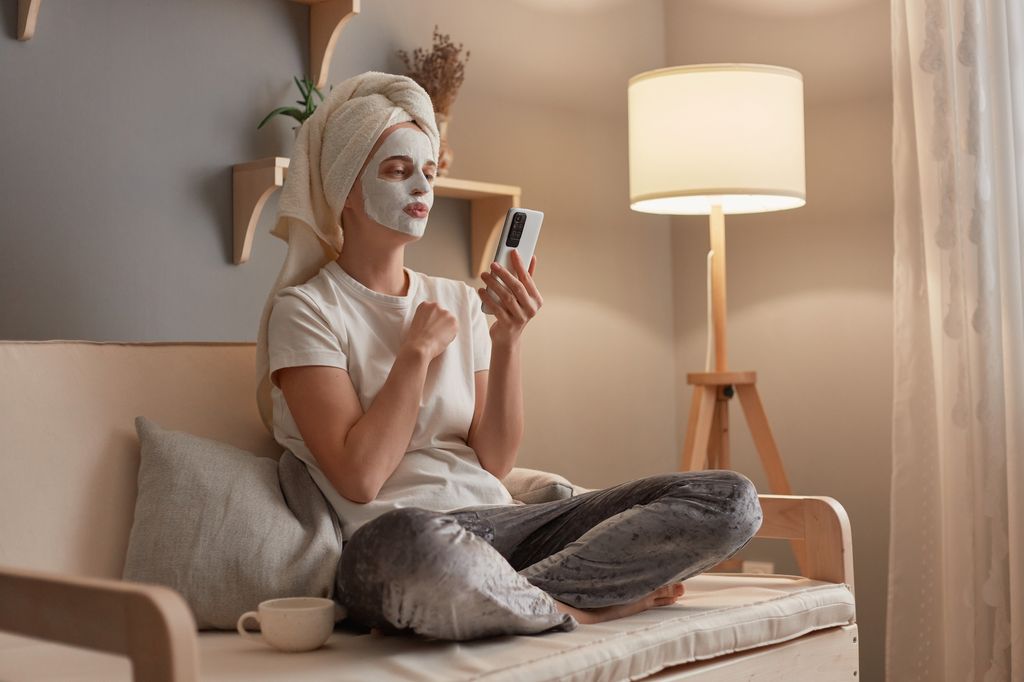
I think we've certainly started talking about self-care a lot more, but we still aren't really practising it. Or if we are, it's often quite superficial. Looking after yourself isn't just a face mask on a Sunday evening; it's about taking a hard look at whether you're sleeping enough, whether you're actually getting enough exercise and whether you're eating healthy whole foods. It's also about having someone to call when you're struggling, and having a support network where you feel genuinely cared for and valued.
When we stop seeing exercise as a chore and link it to something we genuinely enjoy - whether that’s dancing, swimming, hiking, playing with the kids or a sport we’re passionate about - movement stops being a burden and becomes a genuine source of well-being
According to the latest European Health Survey figures, for example, over half of people aged 15 and over are living with at least one chronic condition, yet we've accepted a sedentary lifestyle as the absolute norm. Talking about self-care without questioning that foundation only gets us halfway. We're making progress, but we still need better education and the collective courage to start swimming against the tide.
Why is it that we're so bad at listening to the signals our bodies send us?
I think it's because we've been conditioned to silence the body. If something hurts, we pop a painkiller; if we're tired, we grab another coffee; if something feels "off," we ignore it and just keep pushing on. The modern pace of life rewards productivity over health - we're expected to squeeze out every last drop of energy before we even consider slowing down.
 © Getty Images
The trouble is, the body always presents you with the bill eventually - it just arrives late. It starts with aches and pains, which then leads to an actual diagnosis, and in the end, a loss of autonomy. We don't listen to the warning signs because they demand uncomfortable changes, and we find it much easier to just normalise the discomfort than to actually question how we live. But we also have to face the reality that not everyone is in a position where they can afford to make those changes.
You also suggest that, these days, looking after our health has become an almost impossible task. Why is that?
Because we’re living in an environment that's completely at odds with our biological needs. We've got cheap, ultra-processed food available 24/7, sedentary desk jobs, and cities that aren't built for walking - all topped off with hyper-connectivity and chronic stress.
"If you want to do stretches in the morning, lay your mat out the night before and 'stack' the habit onto something you already do - like during the few minutes you're waiting for the kettle to boil. The key isn't some heroic feat of willpower, you just need to design your environment so the right choice is the easiest one to make"
Our biology was designed for a world of food scarcity and constant movement, yet we're living in the exact opposite. We call it "modern life," but biologically speaking, it’s an evolutionary mismatch.
Looking after yourself today means moving away from the norm: choosing to cook when it's easier to order a takeaway, walking when everything is designed for a car, and switching off screens when the world is practically begging us to stay online. It's not impossible, but it does require a small, daily act of rebellion.
Your change in thinking all began in Okinawa. What was it that drew you to that corner of the world in search of the secrets to longevity?
My experience as a physiotherapist made it clear that our current healthcare model is far too focused on treatment, often overlooking a patient's actual lifestyle. When I learned that Okinawa has one of the highest concentrations of centenarians on Earth, I wanted to see it for myself: how they move, what they eat, how they socialise and how they age. I felt a real need to step out of the clinic and test the theories against people who actually reach their 90s and 100s while remaining independent and full of life.
What were you expecting to find there, and what was the biggest surprise?
I suppose I expected to find specific "tricks" for longevity, but what I actually found was an entire lifestyle. I was particularly struck by how movement is just woven into the fabric of their daily lives; they are constantly getting up and down from the floor, walking, tending to their garden, or doing housework. They don't go to the gym, they move simply to live.
"There is always something you can do to start improving today, no matter how small the gesture... You only have one body, but you have lots of moments you can look after it each day"
I was also moved by the strength of the community. No one grows old alone there; there is a profound sense of belonging. Perhaps the most eye-opening thing was realising that what is perfectly normal for them - eating simply, moving every day and staying connected - has become almost an act of rebellion back home.
Longevity seems to have become a bit of an obsession lately, but it's really about living better, not just longer, isn't it?
Absolutely. There is precious little point in adding years to your life if you spend the last ten of them unable to get dressed or climb a flight of stairs. That's why I place so much emphasis on things like VO₂ max [testing for aerobic fitness] and grip strength; these aren't just technical jargon—they are incredibly powerful indicators of how many years you’ve got left, and more importantly, the quality of those years.
Staying above the "dependency cliff" - that threshold where you lose the physical ability to handle basic daily tasks - requires a bit of intentional effort. True longevity isn't just making it to 90, ideally you'll get there with your independence and dignity intact, and with a genuine desire to keep enjoying life.
About the expert:
Ana Galeote holds a degree in Physiotherapy, specialising in Sports Physiotherapy, and also a degree in Social and Cultural Anthropology. She earned a Master's degree in Pediatric Physiotherapy, Musculoskeletal Osteopathy and Psychoneuroimmunology. The founder and CEO of PhysioWods, she is author of the Spanish-language book, Cuerpo solo hay uno (You Only Have One Body).


