
Last night, my heart was racing. That's something that's not too surprising because lately, every so often, my eyes feel extremely dry or I sense a ringing in my ears.
The first time I heard the ringing, I had the whole family hunting for the source of that incessant buzzing; they thought I’d finally gone round the bend. I initially chalked it up to a dip in blood pressure, but the truth is the hormonal metamorphosis of perimenopause was turning my brain upside down.
Perimenopause is a complex phase of life to navigate - it's a transition that can last anywhere from four to ten years. During this window, the body essentially 'unanchors' ovulation, causing a tidal wave of uncomfortable symptoms.
While some, like hot flushes, seem to be more common knowledge these days, many women mistake less talked-about signs for stress or other issues.
The 'Software Update' phase: Understanding the perimenopause change
As a 2023 Integrated Women’s Health Programme (IWHP) study suggests, this mid-life phase is far more than a simple hormonal shift; it is a total physiological reboot.
Think of perimenopause like downloading a major software update: during the installation, the system might lag or suffer temporary 'glitches', but once the update is complete, clarity and harmony will finally return.
 © Getty Images
1) Heart palpitations: Why your pulse races during the hormonal transition
It is remarkably common to wake up in the dead of night feeling as though your heart is "going to jump out of your chest", or to notice a fluttering, irregular beat during moments of quiet. These heart palpitations don't always stem from a conscious worry; often, they are a physical reflection of unconscious internal stress.
"Understanding that perimenopausal heart palpitations are simply the response of a system in recalibration allows you to meet them with a bit more calm"
During perimenopause, the brain begins to communicate with the autonomic nervous system in a different way. Spikes in hormones like FSH - as the body desperately tries to stimulate the ovaries - or imbalances in neurotransmitters such as GABA and serotonin can make the cardiovascular system far more excitable.
Even when your mind feels perfectly calm, your body may be grappling with cortisol demand or low-grade inflammation, which it interprets as a red flag.
By using tools like diaphragmatic breathing, you can send a clear signal of safety back to your heart and settle your nervous system.
 © Getty Images
2) Tinnitus: When sounds become a sign
Ringing in the ears, or tinnitus, is one of the most unsettling and least-discussed symptoms of this stage.
"During perimenopause, tinnitus is less an isolated symptom and more a reflection of several systems trying to adapt at once"
During perimenopause, the brain can become far more sensitive to stimuli that previously went unnoticed. This is often compounded by changes in microcirculation, increased vascular rigidity and a state of mild inflammation that can sensitise your auditory pathways. As a result, tinnitus rarely stems from a single trigger; instead, it's usually the result of a "perfect storm" of factors, from stress and poor sleep to noise exposure and vascular tension.
It isn't just our hormones that are shifting; our mucous membranes, tissues, and sensory responses are also undergoing a transformation. This affects everything from our auditory perception to the body's ability to correct previous imbalances.
 © Getty Images
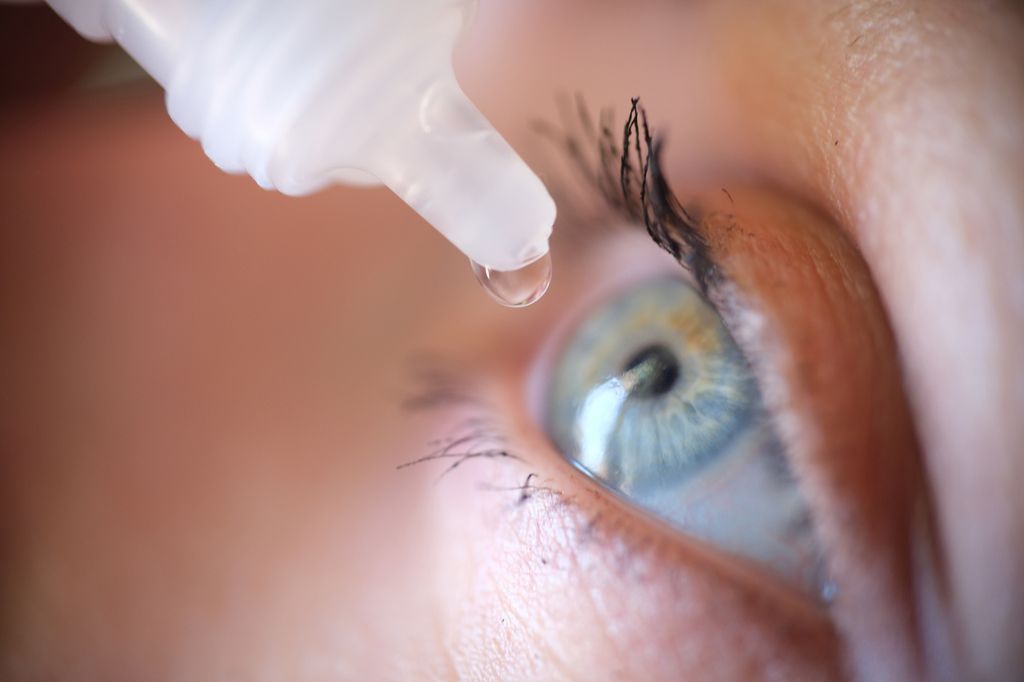
3) The 'cry' of the mucous membranes: Why dry eyes are a warning sign
If you wake up with eyes that feel irritated, burning, or as though they are full of grit, it’s a clear sign that the thinning of your mucous membranes may no longer be just a local issue, but a body-wide perimenopausal one.
While the drop in oestrogen is the primary trigger, ocular health actually relies on a complex, delicate balance. Oestrogen is vital for collagen synthesis - the "glue" that maintains the structure and hydration of our eye tissues. As levels dip, these membranes regenerate less effectively, becoming thinner, more fragile, and less able to hold onto vital moisture.
"Without the synergy between our hormones, gut health, and key nutrients the eyes - which are incredibly sensitive to dehydration during menopause - act as an early warning system for a body out of balance"
This "dryness" is also closely linked to the estrobolome - the specific community of gut bacteria responsible for metabolising oestrogen.
A healthy, balanced microbiome, rich in Lactobacillus strains, helps maintain the integrity of our mucous membranes. When these bacteria diminish due to hormonal shifts, the pH balance is disrupted and our natural defensive barriers begin to weaken.
Compounding this vulnerability is the role of Vitamin A, which is essential for the repair and function of these internal linings.
The perimenopause toolkit: 11 science-backed strategies to regain control
To manage these surprising symptoms, we don't need to fight nature; instead, we should work alongside it using integrative tools that support the nervous, hormonal and metabolic systems.
 © Getty
- High-quality protein: This is essential for maintaining muscle mass, which acts as an endocrine organ by releasing anti-inflammatory "myokines".
- The "Mucous Membrane" Trio: A combination of Vitamin A, Omega-3, and Omega-7 is key for regenerating internal tissues and stabilising the tear film in the eyes. To increase your Omega-3 (EPA and DHA), prioritise oily fish, chia seeds and flaxseeds. These favour cell membrane stability, support cardiovascular function and help modulate inflammation. Omega-7, found in sea buckthorn, is key for maintaining the hydration and elasticity of our mucous membranes - particularly for our eyes.
- Fibre: To support the estrobolome (the gut bacteria involved in oestrogen metabolism), help with hormonal elimination and reduce systemic inflammation.
- Mineralised hydration: Try adding a pinch of sea salt (approx. 1/4 teaspoon per litre) to your water. This helps the body absorb water at a cellular level, though you should always check this with a healthcare professional first.
- Eye drops: Specific ocular solutions are available that can help soothe and hydrate dry, irritated eyes.
- Magnesium: A vital mineral for regulating the nervous system. It can improve sleep quality and may reduce the sensation of heart palpitations.
- Saffron: Known to boost mood and modulate stress, saffron can help lessen the perceived intensity of tinnitus.
- Resveratrol: A powerful antioxidant that offers cellular and vascular protection against oxidative stress.
- 4-7-8 breathing exercise: Inhale for 4 seconds, hold for 7, and exhale for 8. This simple diaphragmatic breathing technique activates the vagus nerve and settles the nervous system.
- Strength training: Two or three sessions a week will improve muscle mass, boost metabolism, and support hormonal balance.
- Cut the stimulants: Reducing caffeine, avoiding glucose spikes and managing chronic stress will help prevent the overstimulation of your nervous and cardiovascular systems.
About the author:
Andrea Carucci is a nutritionist and menopause expert who speaks on perimenopause from both a research standpoint and her personal experience. She is author of the Spanish language books SOS, Menopause is on the Horizon, What Do I Do Now? (SOS, Menopausia a la Vista, ¿Y Ahora Qué Hago?) and The Fertility Kitchen (La Cocina de la Fertilidad).


